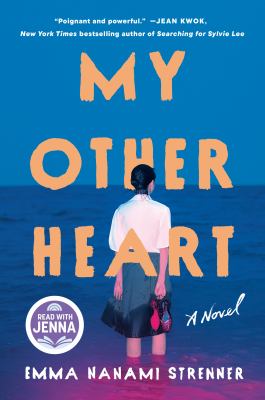






















My Other Heart

My Other Heart

A mother's missing child, a search for identity, and ever-changing notions of "home" - class and race intersect with belonging in this stunning debut novel of mothers, daughters and best friends In June 2000, Mimi Truang is on her way home to Vietnam when her toddler daughter vanishes in the Philadelphia airport. Seventeen years later, two best friends graduate from high school in the WASP-y town of Chestnut Hill, Pennsylvania. Kit is half Japanese, half American, and interracially adopted by white well-to-do parents. Sabrina is the daughter of a Chinese immigrant single mother who brandishes strict household rules to hide her own secrets. During that last summer before college, Kit travels to Tokyo, determined to uncover her Japanese identity. Her dizzying weeks in Tokyo offer her a critical distance from everything she holds dear--and a taste of first love that refines her understanding of what it means to belong. Sabrina had hoped to take a similar trip to China, but money is tight. Her disappointment quickly subsides, however, as her bold, uncompromising boss becomes a mentor, prompting Sabrina to ask questions she's avoided all her life. Meanwhile, Mimi purchases a plane ticket to Philadelphia. She finally has a lead to renew her search in the country where she and her daughter were parted. When Mimi, Kit, and Sabrina come face to face at the end of this transformative summer, they will confront the people they truly are, dismantling their own assumptions about belonging and the importance of blood ties.

Clown Town

Clown Town

The ninth book in the series behind Slow Horses, an Apple original series now streaming on Apple TV+. "Old spies grow ridiculous, River. Old spies aren't much better than clowns." Or so David Cartwright, the late retired head of MI5, used to tell his grandson. He forgot to add that old spies can be dangerous, too, especially if they've fallen on hard times-as River Cartwright is about to learn the hard way. David Cartwright, long buried, has left his library to the Spooks' College in Oxford, and now it turns out that one of the books has gone missing. Or perhaps it never existed. Now River, once a "slow horse" of Slough House, MI5's outpost for demoted and disgraced spies, has some time to kill while awaiting medical clearance to return to work, and investigating the secrets of his grandfather's library seems a harmless activity. But nothing involving the slow horses ever stays harmless for long. Over at the Park, MI5 First Desk Diana Taverner is in a pickle. An operation carried out during the height of the Troubles revealed the ugly side of state security, and those involved are threatening to expose details. But every threat hides an opportunity, and Taverner has come up with a scheme in which the would-be blackmailer is a solution to a much newer problem. All she needs is the right dupe to get caught holding the bag. Jackson Lamb, the enigmatic and odiferous head of Slough House, does not want any of his joes involved. When Taverner starts plotting mischief people get hurt, and Lamb has no plans to send in the clowns. On the other hand, if the clowns ignore his instructions, any harm that befalls them is hardly his fault. But they're his clowns. And if they don't all make it home, there'll be a reckoning.

The True True Story of Raja the Gullible (and His Mother)

The True True Story of Raja the Gullible (and His Mother)

From the inimitable Rabih Alameddine-National Book Award finalist and winner of the PEN/Faulkner Award-comes a tragicomic saga set in Lebanon, a modern story of family, memory, and the unbreakable attachment of a son and his mother. Across his oeuvre, Rabih Alameddine has distinguished himself as a master of the intimate and the political, celebrated for his caustic wit and "compelling, often jarring, blend of cynicism and hope" (The Economist). In this lively new work, Alameddine returns to Beirut-the setting of his breakout novel An Unnecessary Woman-and delivers a compulsively readable story of a winning duo navigating modern life in Lebanon. In a tiny Beirut apartment, sixty-three-year-old Raja and his mother live side by side. A beloved high school philosophy teacher and "the neighborhood homosexual," Raja relishes books, meditative walks, order, and solitude. Zalfa, his octogenarian mother, views her son's desire for privacy as a personal affront. She demands to know every detail of Raja's work life and love life, boundaries be damned. When Raja receives an invite to an all-expenses-paid writing residency in America, the timing couldn't be better. It arrives on the heels of a series of personal and national disasters that have left Raja itching for peace and quiet away from his mother and the heartache of Lebanon. But what at first seems a stroke of good fortune soon leads Raja to recount and relive the very disasters and past betrayals he wishes to forget. Told in Raja's irresistible and wickedly funny voice, the novel dances across six decades to tell the unforgettable story of a singular life and its absurdities-a tale of mistakes, self-discovery, trauma, and maybe even forgiveness. Above all, The True True Story of Raja the Gullible (and His Mother) is a wildly unique and sparkling celebration of love.

The Lost Story of Eva Fuentes

The Lost Story of Eva Fuentes

A mysterious book with a legacy spanning from the beginning of the twentieth century to the present day unites three women in this unforgettable novel. London, 2024: When American expat Margo Reynolds is hired to source a book that's more than one hundred and twenty years old, she thinks her greatest challenge is going to be that there's only one copy in existence. However, it quickly becomes clear that her client isn't the only person determined to procure the book at any cost. Thrust into a deadly quest, Margo teams up with an unlikely ally-the man she loved and lost-and is forced to confront the ghosts of her own past as the lingering feelings that simmer between them ignite. Havana, 1966: Pilar Castillo's days are spent working as a librarian in Havana, her nights spent hoping for her husband's freedom after his unjust imprisonment. But Pilar has a secret that could jeopardize her life. She's fighting Fidel's regime in her own way, and when she comes into possession of a book that was published more than sixty years earlier, she must decide how much she's willing to risk to protect the literary works entrusted to her care. Boston, 1900: For Cuban teacher Eva Fuentes, traveling from Havana to Harvard to participate in the largest cultural exchange between Cuba and the United States is not only a chance to represent her country at a critical time in its bid for independence, but also an opportunity to work on the book she's writing. When a moonlit encounter with an enigmatic stranger alters the course of Eva's summer at Harvard, and as secrets, lies, and forbidden love rise to the surface, Eva's life-and legacy-is irrevocably changed.

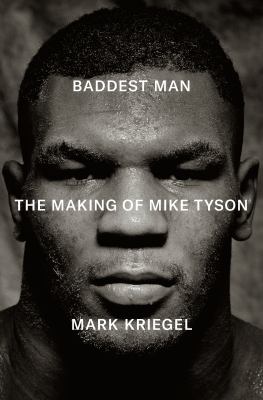
Baddest Man: The Making of Mike Tyson

Baddest Man: The Making of Mike Tyson

From the acclaimed New York Times bestselling author whose coverage of Mike Tyson and his inner circle dates back to the 1980s, a magnificent noir epic about fame, race, greed, criminality, trauma, and the creation of the most feared and mesmerizing fighter in boxing history. On an evening that defined the Greed is Good 1980s, Donald Trump hosted a raft of celebrities and high rollers in a carnival town on the Jersey Shore to bask in the glow created by a 21-year-old heavyweight champion. Mike Tyson knocked out Michael Spinks that night, and in 91 frenzied seconds earned more than the annual payrolls of the Los Angeles Lakers and Boston Celtics combined. It had been just eight years since Tyson, a feral child from a dystopian Brooklyn neighborhood was delivered to boxing's forgotten wizard, Cus D'Amato, living a self-imposed exile in upstate New York. Together, Cus and the Kid were an irresistible story of mutual redemption-darlings to the novelists, screenwriters and newspapermen long charmed by D'Amato, and perfect for the nascent industry of cable television. Long before anyone heard of Tony Soprano, Mike Tyson was HBO's leading man. It was the greatest sales job in the sport's history, and the most lucrative. But the business of Tyson concealed truths that were darker and more nuanced than the script would allow. The intervening decades have seen Tyson villainized, lionized, and fetishized-but never, until now, fully humanized. Mark Kriegel, an acclaimed biographer regarded as "the finest boxing writer in America," was a young cityside reporter at the New York Daily News when first swept up in the Tyson media hurricane, but here measures his subject not by whom he knocked out, but by what he survived. Though Tyson was billed as a modern-day Jack Dempsey, the truth was closer to Sonny Liston. Tyson was Black, feared, and born to die young. What made Liston a pariah, though, would make Tyson-in a way his own handlers could never understand-a touchstone for a generation raised on a soundtrack of hip hop and gunfire. What Peter Guralnick did for Elvis in Train to Memphis and James Kaplan for Sinatra in Frank, Kriegel does for Tyson. It's not just the mesmerizing ascent that he captures, but Tyson's place in the American psyche.

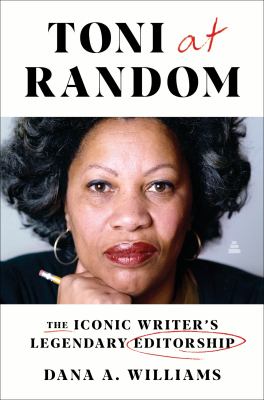
Toni at Random: The Iconic Writer's Legendary Editorship

Toni at Random: The Iconic Writer's Legendary Editorship

An insightful exploration that unveils the lesser-known dimensions of this legendary writer and her legacy, revealing the cultural icon's profound impact as a visionary editor who helped define an important period in American publishing and literature. A multifaceted genius, Toni Morrison transcended her role as an author, helping to shape an important period in American publishing and literature as an editor at one of the nation's most prestigious publishing houses. While Toni Morrison's literary achievements are widely celebrated, her editorial work is little known. Drawing on extensive research and firsthand accounts, this comprehensive study discusses Morrison's remarkable journey from her early days at Random House to her emergence as one of its most important editors. During her tenure in editorial, Morrison refashioned the literary landscape, working with important authors, including Toni Cade Bambara, Leon Forrest, and Lucille Clifton, and empowering cultural icons such as Angela Davis and Muhammad Ali to tell their stories on their own terms. Toni Morrison herself had great enthusiasm about Dana Williams's work on this story, generously sharing memories and thoughts with the author over the years, even giving her the book's title. From the manuscripts she molded, the authors she nurtured, and the readers she inspired, Toni at Random demonstrates how Toni Morrison has influenced American culture beyond the individual titles or authors she published. Morrison's contribution as an editor transformed the broader literary landscape and deepened the cultural conversation. With unparalleled insight and sensitivity, Toni at Random charts this editorial odyssey.
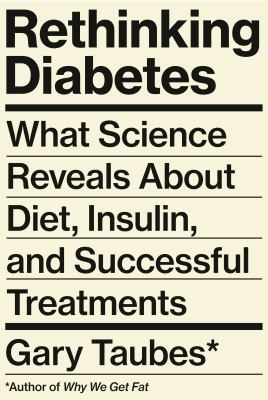
The Unexpected Journey: Finding Strength, Hope, and Yourself on the Caregiving Path

The Unexpected Journey: Finding Strength, Hope, and Yourself on the Caregiving Path

The day Emma Heming Willis' husband, Bruce Willis, was diagnosed with frontotemporal dementia (FTD), all they were given was a pamphlet and told to check back in a few months. With no hope or direction, Emma walked out of that doctor's appointment frozen with fear, confusion and a sense that her world had just fallen apart. In fact, it had. Bruce and Emma had their story written, their future mapped out. Yet all those dreams crumbled with that diagnosis, and Emma felt alone and more isolated than ever. How would she care for her husband while parenting their young daughters? At that devastating time, Emma just wanted someone who'd been through it to tell her, "This feels terrible right now. Your life is in shambles. But it's going to be okay. Here are some things to think about and put in place so you cannot just survive but thrive." With The Unexpected Journey, Emma has written the book she wishes she'd been handed on the day of Bruce's diagnosis: a supportive guide to navigating the complicated, heartbreaking, and transformative experience that is caregiving for your loved one. Weaving her personal journey as a care partner with the latest research and insights from the world's top dementia, caregiving, and integrative experts she offers the guidance and wisdom caregivers everywhere so desperately need to hear, including: A diagnosis isn't just a label, it's a starting point. It helps you better understand your person's behavior and respond with more clarity and compassion; Taking care of yourself is not optional; it's mandatory. It will make you a better care partner. It's not selfish, it's self-preserving; You don't have a choice about being on the dementia caregiving journey. But you do have a choice in terms of how you approach it and reframe it; Caregivers are human so you aren't always going to be patient and selfless. You have challenges and struggle with conflicting emotions and that's okay. Ultimately, The Unexpected Journey shows you how to care for yourself while doing one of the hardest, most heartbreaking jobs in the world. Because if you don't take care of yourself, you are not going to be able to look after anyone else -- especially your loved one with dementia.
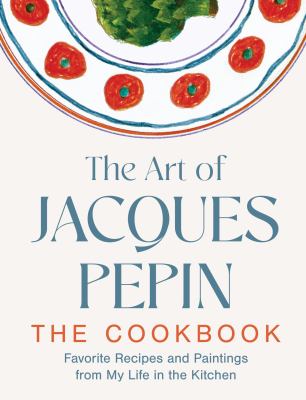
Breakneck: China's Quest to Engineer the Future

Breakneck: China's Quest to Engineer the Future

For close to a decade, technology analyst Dan Wang has been living through the country's astonishing, messy progress. China's towering bridges, gleaming railways, and sprawling factories have improved economic outcomes in record time. But rapid change has also sent ripples of pain through the society. This reality -- political repression and astonishing growth -- is not a paradox, but rather a feature of China's engineering mindset. In Breakneck, Wang blends political, economic, and philosophical analysis with reportage to reveal a provocative new framework for understanding China -- one that helps us see America more clearly, too. While China is an engineering state, relentlessly pursuing megaprojects, the United States has stalled. America has transformed into a lawyerly society, reflexively blocking everything, good and bad. Blending razor-sharp analysis with immersive storytelling, Wang offers a gripping portrait of a nation in flux. Breakneck traverses metropolises like Shanghai, Chongqing, and Shenzhen, where the engineering state has created not only dazzling infrastructure but also a sense of optimism. The book also exposes the downsides of social engineering, including the surveillance of ethnic minorities, political suppression, and the traumas of the one-child policy and zero-Covid. In an era of animosity and mistrust, Wang unmasks the shocking similarities between the United States and China. Breakneck reveals how each country points toward a better path for the other: Chinese citizens would be better off if their government could learn to value individual liberties, while Americans would be better off if their government could learn to embrace engineering -- and to produce better outcomes for the many, not just the few.

Strangers in the Land: Exclusion, Belonging, and the Epic Story of the Chinese

Strangers in the Land: Exclusion, Belonging, and the Epic Story of the Chinese

From New Yorker editor and writer Michael Luo, a vivid, urgent history of two centuries of Chinese exclusion and the birth of anti-Asian feeling in America. In 1889, when the Supreme Court upheld the Chinese Exclusion Act-a measure barring Chinese laborers from entering the United States that remained in effect for more than fifty years-Justice Stephen Johnson Field characterized the Chinese as a people "residing apart by themselves." They were, Field concluded, "strangers in the land." Today, there are more than twenty-two million people of Asian descent in the United States, yet this label still hovers over Asian Americans. In Strangers in the Land, Luo traces anti-Asian feeling in America to the first wave of immigrants from China in the mid-nineteenth-century: laborers who traveled to California in search of gold and railroad work. Their communities almost immediately faced mobs of white vigilantes who drove them from their workplaces and homes. In his rich, character-driven history, Luo tells stories like that of Denis Kearney, the sandlot demagogue who became the face of the anti-Chinese movement, and of activists who fought back, like Massachusetts Senator George Frisbie Hoar and newspaperman Wong Chin Foo. After the halt on immigration in 1889, the Chinese-American community who remained struggled to survive and thrive on the margins of American life. In 1965, when LBJ's Immigration and Nationality Act forbade discrimination by national origin, America opened its doors wide to families like those of Luo's parents, but he finds that the centuries of exclusion of Chinese-Americans left a legacy: many Asians are still treated, and feel, like outsiders today. Strangers in the Land is a sweeping narrative of a forgotten chapter in American history, and a reminder that America's present reflects its exclusionary past.