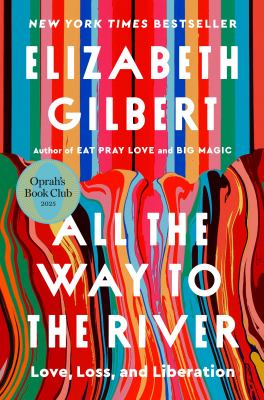
All the Way to the River
An essential, universally resonant new memoir from the #1 bestselling author of Eat Pray Love and Big Magic
DiMattia Building
1 Public Library Plaza
Stamford, CT 06904
United States
115 Vine Road
Stamford, CT 06905
United States
Lathon Wider Community Center
34 Woodland Avenue
Stamford, CT 06902
United States
1143 Hope Street
Stamford, CT 06907
United States
245 Selleck Street
Stamford, CT 06902
United States
United States
United States
United States
An essential, universally resonant new memoir from the #1 bestselling author of Eat Pray Love and Big Magic
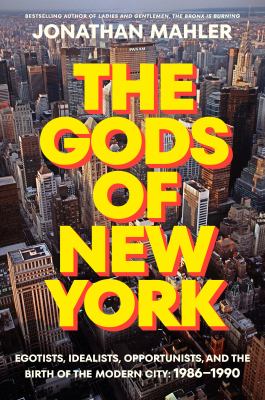
New York City entered 1986 as a city reborn, with record profits on Wall Street sending waves of money splashing across Manhattan and bringing a once-bankrupt, reeling city back to life. But it also entered 1986 as a city divided. Nearly one-third of the city's Black and Hispanic residents were living below the federal poverty line. Thousands of New Yorkers were sleeping in the streets-and in many cases addicted to drugs, dying of AIDS, or suffering from mental illness. The manufacturing jobs that had once sustained a thriving middle class had vanished. Long-simmering racial tensions threatened to boil over. Over the next four years, a singular confluence of events-involving a cast of outsized, unforgettable characters-would widen those divisions into chasms. Ed Koch. Donald Trump. Al Sharpton. The Central Park Five. Spike Lee. Rudy Giuliani. Howard Beach. Tawana Brawley. The Preppy Murder. Jimmy Breslin. Do the Right Thing, Wall Street, crack, the AIDS epidemic, and, of course, ready to pour gasoline on every fire-the tabloids. In The Gods of New York, Jonathan Mahler tells the story of these convulsive, defining years"-- Provided by publisher.
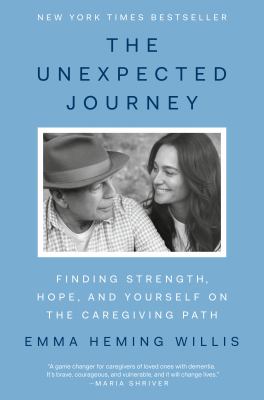
The day Emma Heming Willis' husband, Bruce Willis, was diagnosed with frontotemporal dementia (FTD), all they were given was a pamphlet and told to check back in a few months. With no hope or direction, Emma walked out of that doctor's appointment frozen with fear, confusion and a sense that her world had just fallen apart. In fact, it had. Bruce and Emma had their story written, their future mapped out. Yet all those dreams crumbled with that diagnosis, and Emma felt alone and more isolated than ever. How would she care for her husband while parenting their young daughters? At that devastating time, Emma just wanted someone who'd been through it to tell her, "This feels terrible right now. Your life is in shambles. But it's going to be okay. Here are some things to think about and put in place so you cannot just survive but thrive." With The Unexpected Journey, Emma has written the book she wishes she'd been handed on the day of Bruce's diagnosis: a supportive guide to navigating the complicated, heartbreaking, and transformative experience that is caregiving for your loved one. Weaving her personal journey as a care partner with the latest research and insights from the world's top dementia, caregiving, and integrative experts she offers the guidance and wisdom caregivers everywhere so desperately need to hear, including: A diagnosis isn't just a label, it's a starting point. It helps you better understand your person's behavior and respond with more clarity and compassion; Taking care of yourself is not optional; it's mandatory. It will make you a better care partner. It's not selfish, it's self-preserving; You don't have a choice about being on the dementia caregiving journey. But you do have a choice in terms of how you approach it and reframe it; Caregivers are human so you aren't always going to be patient and selfless. You have challenges and struggle with conflicting emotions and that's okay. Ultimately, The Unexpected Journey shows you how to care for yourself while doing one of the hardest, most heartbreaking jobs in the world. Because if you don't take care of yourself, you are not going to be able to look after anyone else -- especially your loved one with dementia.
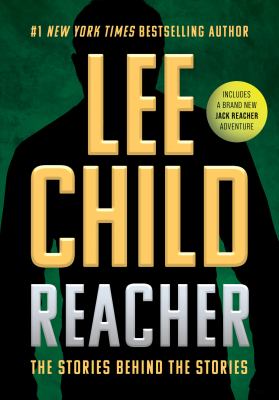
After making his debut in 1997's 'Killing floor,' Jack Reacher has quickly become one of the most popular--and most enduring--fictional heroes to emerge in the past half century. Now, his creator tells the stories behind the stories. These are the origin tales of all of the Reacher novels written solely by Lee Child, chock full of colorful anecdotes and intriguing inspirations. One by one, they expand upon each novel and place it in the context not only of the author's life, but of the world outside the books. And taken together, they chart the rise of an action icon, from 'Killing floor' to 2019's 'Blue moon.' An afterword by crime fiction expert and bookseller Otto Penzler considers the importance of the character and novels in the canon of contemporary crime fiction. This volume also includes an original Reacher short story--the first new Reacher appearance entirely written by Lee Child since 2019. Entertaining and enlightening, 'Reacher: the stories behind the stories' is a must-read for fans of the Jack Reacher series and a capstone to any collection of this excellent author.
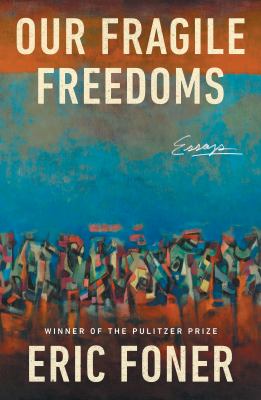
This collection of an influential historian's recent reviews and commentaries demonstrates the range of his interests and expertise, running from slavery and antislavery, through the disunion and remaking of the United States in the nineteenth century, Jim Crow and the civil rights movement and into our current politics.
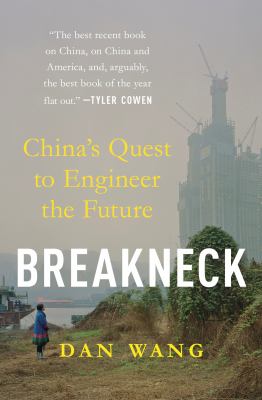
For close to a decade, technology analyst Dan Wang has been living through the country's astonishing, messy progress. China's towering bridges, gleaming railways, and sprawling factories have improved economic outcomes in record time. But rapid change has also sent ripples of pain through the society. This reality -- political repression and astonishing growth -- is not a paradox, but rather a feature of China's engineering mindset. In Breakneck, Wang blends political, economic, and philosophical analysis with reportage to reveal a provocative new framework for understanding China -- one that helps us see America more clearly, too. While China is an engineering state, relentlessly pursuing megaprojects, the United States has stalled. America has transformed into a lawyerly society, reflexively blocking everything, good and bad. Blending razor-sharp analysis with immersive storytelling, Wang offers a gripping portrait of a nation in flux. Breakneck traverses metropolises like Shanghai, Chongqing, and Shenzhen, where the engineering state has created not only dazzling infrastructure but also a sense of optimism. The book also exposes the downsides of social engineering, including the surveillance of ethnic minorities, political suppression, and the traumas of the one-child policy and zero-Covid. In an era of animosity and mistrust, Wang unmasks the shocking similarities between the United States and China. Breakneck reveals how each country points toward a better path for the other: Chinese citizens would be better off if their government could learn to value individual liberties, while Americans would be better off if their government could learn to embrace engineering -- and to produce better outcomes for the many, not just the few.
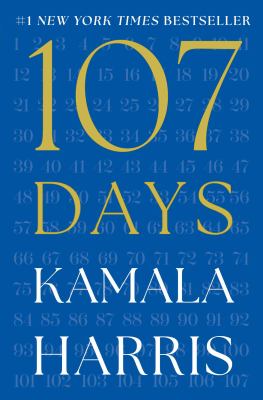
For the first time, and with surprising and revealing insights, Kamala Harris tells the story of one of the wildest and most consequential presidential campaigns in American history. Your Secret Service code name is Pioneer. You are the first woman in history to be elected vice president of the United States. On July 21, 2024, your running mate, Joe Biden, announces that he will not be seeking reelection. The presidential election will occur on November 5, 2024. You have 107 days. Written with candor, a unique perspective, and the pace of a page-turning novel, 107 Days takes you inside the race for the presidency as no one has ever done before.
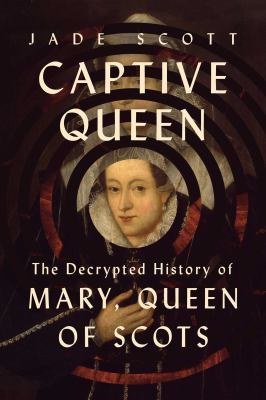
A historian examines hundreds of newly decoded letters from Mary, Queen of Scots, revealing her strategic use of encrypted communication during her imprisonment and providing fresh insights into her relationships, influence and resilience before her execution in 1587.
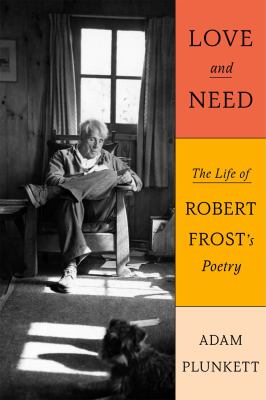
Regarded as America's best-loved poet in the mid-twentieth century, biographers created conflicting images of Robert Frost and his legacy after his death. In "Love and need," Adam Plunkett combines biography and literary criticism to uncover a more nuanced portrait of the man. Through close readings of his work, Plunkett highlights the ways in which Frost's poetry mirrored significant relationships in his life--including the fraught relationship with biographer Lawrance Thompson, whose scathing, three-part work published after the poet's death had a lasting impact on his reputation.
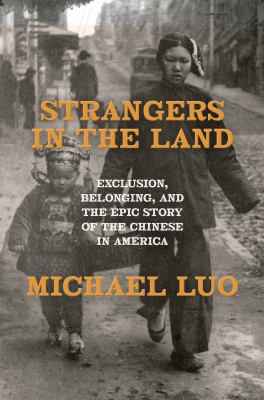
From New Yorker editor and writer Michael Luo, a vivid, urgent history of two centuries of Chinese exclusion and the birth of anti-Asian feeling in America. In 1889, when the Supreme Court upheld the Chinese Exclusion Act-a measure barring Chinese laborers from entering the United States that remained in effect for more than fifty years-Justice Stephen Johnson Field characterized the Chinese as a people "residing apart by themselves." They were, Field concluded, "strangers in the land." Today, there are more than twenty-two million people of Asian descent in the United States, yet this label still hovers over Asian Americans. In Strangers in the Land, Luo traces anti-Asian feeling in America to the first wave of immigrants from China in the mid-nineteenth-century: laborers who traveled to California in search of gold and railroad work. Their communities almost immediately faced mobs of white vigilantes who drove them from their workplaces and homes. In his rich, character-driven history, Luo tells stories like that of Denis Kearney, the sandlot demagogue who became the face of the anti-Chinese movement, and of activists who fought back, like Massachusetts Senator George Frisbie Hoar and newspaperman Wong Chin Foo. After the halt on immigration in 1889, the Chinese-American community who remained struggled to survive and thrive on the margins of American life. In 1965, when LBJ's Immigration and Nationality Act forbade discrimination by national origin, America opened its doors wide to families like those of Luo's parents, but he finds that the centuries of exclusion of Chinese-Americans left a legacy: many Asians are still treated, and feel, like outsiders today. Strangers in the Land is a sweeping narrative of a forgotten chapter in American history, and a reminder that America's present reflects its exclusionary past.

In July 2023 the Wagner Group assembled an armed convoy that included tanks and rocket launchers and set out on what seemed like a journey to take control of Moscow. The last person to attempt such a venture was Adolf Hitler. Wagner's power began from patronage, then grew from international theft and extortion, until it was so great it exposed the weakness of Russia's conventional military and became a threat to the Russian state, one that was not demonstrably eliminated until a private jet containing Wagner's core commanders was blown up in midair. That Yevgeny Prigozhin, a local criminal thug, was able to build a private army that was on the threshold of overwhelming the world's second largest country seems incredible. In fact, it was inevitable following the hollowing out of the Russian military, the creeping use of contract groups for murky foreign missions, power struggles inside the Kremlin, and the ability of the new militias to corner and exploit the black economy. Told with unique inside sourcing and expertise, Putin's Sledgehammer is a gripping and terrifying account of a superpower that contracted its soul to a pitiless militia.
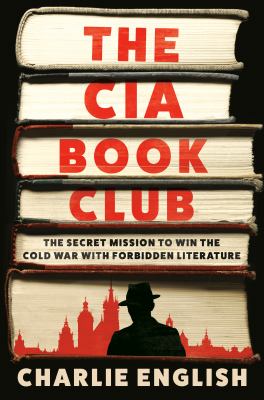
Recounts a covert Cold War operation led by George Minden to smuggle banned literature into Eastern Europe, focusing on the cultural and psychological battle against Soviet censorship and the role underground reading networks played in weakening totalitarian control, especially in Poland.
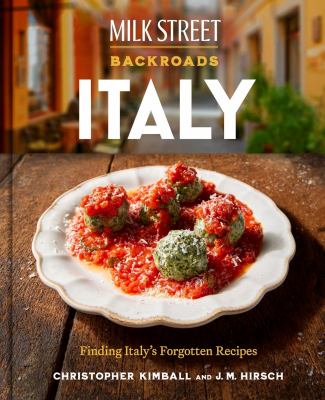
Forget everything you thought you knew about Italian food. In Italy, cooks throw away their garlic, they don't stir their polenta, and they never labour over pans of risotto. But they do make enormous meatballs that are tender and light, and they occasionally break all the rules when making pasta. The editors at Milk Street have spent years scouring small eateries, local markets, farms and home kitchens from Lombardy to Calabria and from Sardinia to Sicily in search of fresh takes on classic recipes as well as little-known regional favorites that never crossed the Atlantic. On our travels we found new ways with pasta, from foolproof cacio e pepe in Rome to Puglia's olive oil-crisped fettuccine with chickpeas and a lemony pesto from Amalfi, where the pasta itself is enriched with citrus.

Everything you need to know about the basics of growing lavender in different climates and conditions, for growers at any scale. Included is detailed information on how to grow and maintain healthy plants (including pruning, pest control, ecological cultivation strategies), the best species and varieties, how to harvest and preserve the flowers, recipes and crafts for each season, and information for growers who want to produce plants on a larger scale.
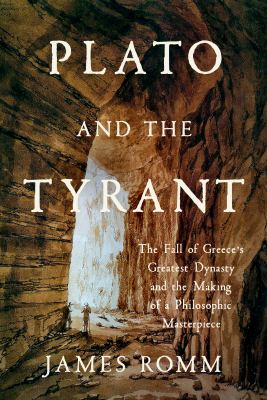
Plato and the Tyrant by James Romm reexamines Plato not as a detached philosopher, but as an active political figure who sought to implement his ideas in the real world. Drawing on Plato's personal letters, Romm details his involvement with the tyrants of Syracuse and how this experience shaped his political philosophy, especially in The Republic. The book reveals how Plato's attempt to guide rulers with philosophy ended in personal and political disaster, offering a dramatic and insightful new perspective on the origins of Western political thought.
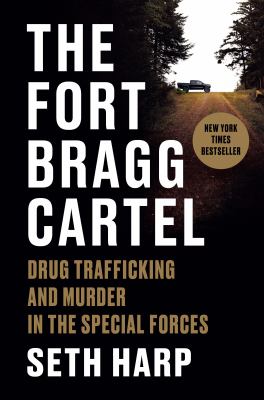
A groundbreaking investigation into a string of unsolved murders at America's premier special operations base, and what the crimes reveal about drug trafficking and impunity among elite soldiers.
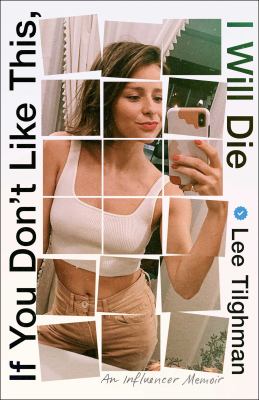
Lee Tilghman--also known as @LeefromAmerica--was one of the veryfirst wellness influencers. To her nearly 400,000 followers, she shared daily updates and advice on everything from skincare and sleep hacks to smoothie bowls, travel, and workout routines. She embodied #SelfCare. Her sponsorships with such brands as Madewell and Subarunetted an income of over $300,000 a year. On the grid, her life seemed perfect. But behind her carefully curated posts, Tilghman was in crisis, suffocating from the unrelenting demand of keeping up her online facade. Her friendships frayed from an inability to enjoy any activity, even a simple dinner, without taking hundreds of photos.She found herself viewing everything she did as potential content for Instagram. The more she shared, the more her followers craved. ... Her job's focus on food led her to develop a severe fixation on healthy eating. ... After a stay in a mental health facility to address her disordered eating and psychological decline, Tilghman quit influencing as her primary career and set out to discover who she really was.
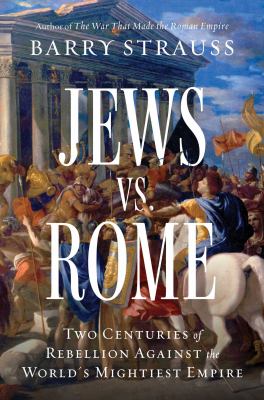
A new history of two centuries of Jewish revolts against the Roman Empire, drawing on recent archeological discoveries and new scholarship by leading historian Barry Strauss.
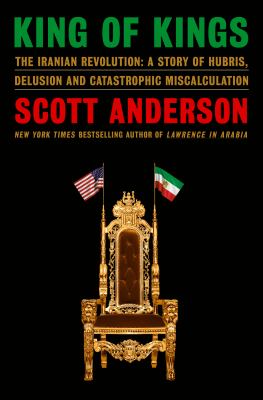
A stunningly revelatory narrative history of one of the most momentous events in modern times, the jaw-dropping stupidity of the American government, and the dawn of the age of religious nationalism.
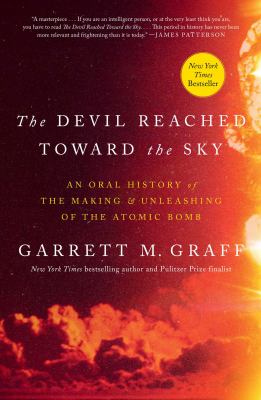
On the 80th anniversary of the Hiroshima and Nagasaki bombings, the Pulitzer Prize finalist whose work is 'oral history at its finest' (Pittsburgh Post-Gazette) delivers an epic narrative of the atomic bomb's creation and deployment, woven from the voices of hundreds of scientists, generals, soldiers, and civilians. ... Drawing from dozens of oral history archives and hundreds of books, reports, letters, diaries, and transcripts from across the US, Japan, and Europe, Graff masterfully blends the memories and perspectives from the known and unknown--key figures like J. Robert Oppenheimer, General Leslie Groves, and President Truman; the crews of the B-29 bombers; and the haunting stories of the Hibakusha--the 'bomb-affected people.' Both a testament to human ingenuity and resilience and a compelling drama told by the participants who lived it, The Devil Reached Toward the Sky is a singular, profound, and searing book about the inception of our most powerful weapon and its haunting legacy.
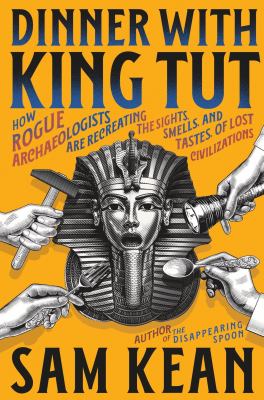
An archaeological romp through the entire history of humankind--and through all five senses--from tropical Polynesian islands toforbidding arctic ice floes, and everywhere in between.
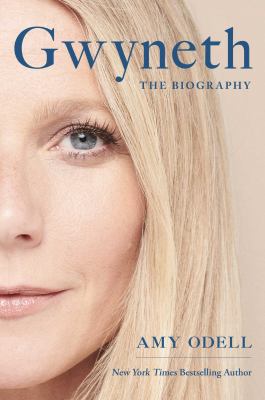
Amy Odell takes readers inside the world of one of the most influential and polarizing celebrities of the modern era--complete with exclusive new stories about her childhood, acting career, romances, and her lifestyle brand Goop. Love her or hate her, Gwyneth Paltrow has managed to stay on the A-list, her influence spanning entertainment, fashion, and the modern wellness industry. Gwyneth was born to parents viewed as Hollywood royalty, and that immense privilege turned her into a target of backlash when, at just twenty-six, she won an Oscar. Rather than cave in to criticism, she leveraged the attention for valuable endorsement deals and film roles, eventually founding her controversial wellness and lifestyle company, Goop. Over the decades, she has participated in countless carefully managed interviews, but the real Gwyneth--the basis of her motives, desires, strengths, faults, and vulnerabilities--has never been fully revealed, until now. Based on exclusive conversations with more than 220 sources, including close current and former friends and colleagues, this deeply researched biography provides insight and behind-the-scenes details of her relationships, family, friendships, iconic films, and tenure as the CEO of Goop. Gwyneth offers the fascinating, definitive look at how Paltrow rose to prominence, stayed in the limelight, and shaped culture--for better or worse--for so long.
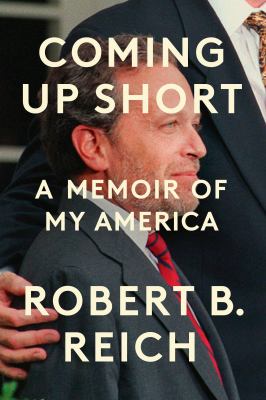
From political economist, cabinet member, beloved professor, media presence, and bestselling author of Saving Capitalism and The Common Good, a deeply-felt, compelling memoir of growing up in a baby-boom America that made progress in certain areas, fell short in so many important ways, and still has lots of work to do. A thought-provoking, principled, clear-eyed chronicle of the culture, politics, and economic choices that have landed us where we are today-with irresponsible economic bullies and corporations with immense wealth and lobbying power on top, demagogues on the rise, and increasing inequality fueling anger and hatred across the country. Nine months after World War II, Robert Reich was born into a united America with a bright future-that went unrealized for so many as big money took over our democracy. His encounter with school bullies on account of his height-4'11" as an adult-set him on a determined path to spend his life fighting American bullies of every sort. He recounts the death of a friend in the civil rights movement; his political coming of age witnessing the Berkeley free speech movement; working for Bobby Kennedy and Senator Eugene McCarthy; experiencing a country torn apart by the Vietnam War; meeting Hillary Rodham in college, Bill Clinton at Oxford, and Clarence Thomas at Yale Law. He details his friendship with John Kenneth Galbraith during his time teaching at Harvard, and subsequent friendships with Bernie Sanders and Ted Kennedy; his efforts as labor secretary for Clinton and economic advisor to Barack Obama. Ultimately, Reich asks: What did his generation accomplish? Did they make America better, more inclusive, more tolerant? Did they strengthen democracy? Or, did they come up short? In the end, though, Reich hardly abandons us to despair over a doomed democracy. With his characteristic spirit, humor, and inherent decency, he lays out how we can reclaim a sense of community and a democratic capitalism based on the American ideals we still have the power to salvage"-- Provided by publisher.
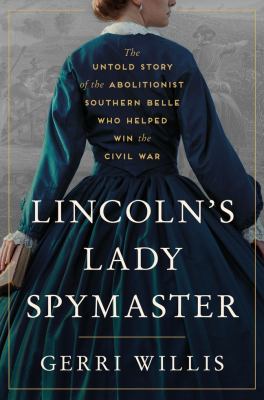
A historical account of wealthy Southern belle Elizabeth Van Lew, whose espionage for Abraham Lincoln and the Union helped win the Civil War.
Mark R. Levin delivers a profound analysis of the philosophy and structure of power and the critical impact of liberty on our collective future. Throughout history, from ancient civilizations to modern Western republics, power has been used to both oppress and liberate. To reward and exploit. To destroy and build. Monarchs, dictators, and elites who impose tyranny seek to consolidate power, stripping freedom from individuals to maintain control over societies. They use force and deception to ensure their rules remain unchallenged, claiming to act in the name of the common good while stripping individuals of their freedoms. In contrast, those who seek to use power for good--such as America's Constitutional Framers--understand that strong societies are born not from force, but consent. Societies built on checks and balances, fair elections, and the preservation of individual rights not only survive, but thrive. Following in the footsteps of works by thinkers such as Alexis de Tocqueville and Frédéric Bastiat, Mark R. Levin's On Power examines how power shapes history, offering invaluable insights into individual liberty, unalienable rights, and conservative principles from one of the leading philosophers of modern conservatism.
Every day we draw in two thousand gallons of air--and thousands of living things. From the ground to the stratosphere, the air teems with invisible life. This last great biological frontier remains so mysterious that it took over two years for scientists to finally agree that the Covid pandemic was caused by an airborne virus. In Air-Borne, award-winning New York Times columnist and author Carl Zimmer leads us on an odyssey through the living atmosphere and through the history of its discovery. We travel to the tops of mountain glaciers, where Louis Pasteur caught germs from the air, and follow Amelia Earhart and Charles Lindbergh above the clouds, where they conducted groundbreaking experiments. We meet the long-forgotten pioneers of aerobiology including William and Mildred Wells, who tried for decades to warn the world about airborne infections, only to die in obscurity. Air-Borne chronicles the dark side of aerobiology with gripping accounts of how the United States and the Soviet Union clandestinely built arsenals of airborne biological weapons designed to spread anthrax, smallpox, and an array of other pathogens. Air-Borne also leaves readers looking at the world with new eyes--as a place where the oceans and forests loft trillions of cells into the air, where microbes eat clouds, and where life soars thousands of miles on the wind. Weaving together gripping history with the latest reporting on COVID and other threats to global health, Air-Borne surprises us on every page as it reveals the hidden world of the air.
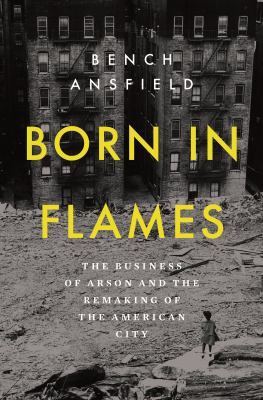
A young historian's superlative debut . . . this excellent book delivers the truth about 'the burning years." --Kirkus Reviews (starred review) "[R]iveting . . . an outstanding expose of the predatory capitalist machinations behind the 'Bronx is burning' saga."--Publishers Weekly (starred review) The explosive account of the arson wave that hit the Bronx and other American cities in the 1970s--and its legacy today.
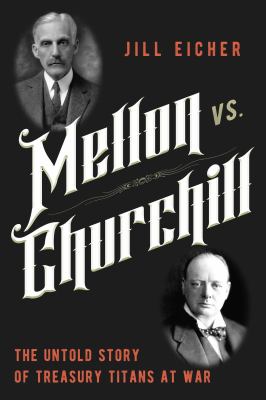
The never-before-told story of the epic battle of wills between Andrew Mellon and Winston Churchill, as they debated the repayment of the enormous sums loaned by America to Great Britain during World War I. Andrew Mellon, one of the most accomplished businessmen of his era, is almost unknown today. To this shy, diffident (but brilliant) man fell the daunting task of collecting the war debts from European governments still devastated by World War I and struggling to recover economically. Dealing with the U.S. Congress and the heads of foreign governments on the world stage became one of the great adventures of his life. Winston Churchill is one of the best-known figures in history. Mellon vs. Churchill presents Churchill through a different lens, focusing on his service as Chancellor of the Exchequer when Great Britain was the largest debtor to the United States. That he became the most vocal critic of American foreign policy during that time is a scarcely told chapter of economic history, and his long and contentious debate with Mellon has seldom been explored. Yet, during the five years that Churchill served as Chancellor of the Exchequer (1924-1929), Mellon was his counterpart at the United States Treasury, and their debate and fierce differences of opinion about the handling of what Churchill called "the monstrous war debts" made frequent headlines on both sides of the Atlantic. No mention of any of their five meetings are included in the official biographies of either man. Now these confrontations are brought to vivid life in Mellon vs. Churchill, as are many other vignettes from their very public, but largely forgotten, rivalry. Mellon vs. Churchill brings the reader inside the adventurous lives of these two great public figures-men who were not afraid to take huge risks to pursue their grand ambitions.
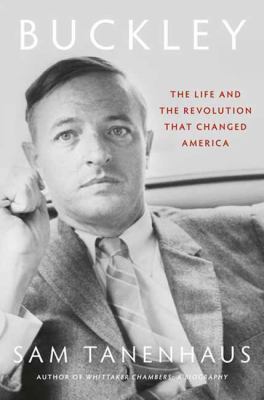
At age 25 in 1951, with the publication of God and Man at Yale, a scathing attack on his alma mater, William F. Buckley, Jr. instantly seized the public stage-and commanded it for the next half century, leading a new generation of activists and ideologues to the heights of political power while he himself attained unique fame and public influence. Ten years before his death in 2008, Buckley chose prize-winning biographer Sam Tanenhaus to tell the full story of his life and times, granting him extensive interviews, entrée to his intimate circle, and unrestricted access to his most private papers. Thus began a deep investigation into the vast and often hidden universe of Bill Buckley and the conservative revolution. Buckley vividly captures its subject in all his facets and phases-founding editor of National Review, best-selling novelist and memoirist, jet-setting clubman and socialite, downhill skier and sailboat racer, wisecracking candidate for mayor of New York, flamboyant antagonist of James Baldwin and Gore Vidal, mentor and idol to hundreds who today populate the worlds of politics and media. Tanenhaus also reveals the private and at times secret life of Bill Buckley: his backstage collaborations with Senator Joseph McCarthy and Watergate felon Howard Hunt; thorny relationships with Presidents Nixon and Reagan; flirtations with financial ruin and legal censure-and, late in life, Buckley's lonely struggle to hold together a movement coming apart over AIDS, the culture wars, and the invasion of Iraq. Majestic in its sweep, lushly detailed, rich in ideas and argument, packed with news and revelations, Buckley is the definitive account of an American giant and the revolution he led.
Looks at how Apple helped build China's dominance in electronics assembly and manufacturing, only to find itself trapped in a relationship with an authoritarian state making ever-increasing demands.
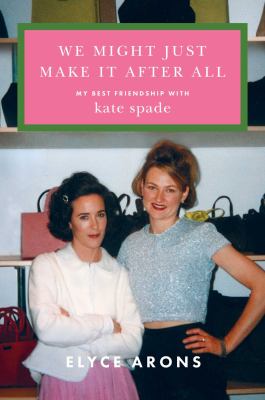
A moving portrait of friendship by Elyce Arons as she reflects on her long relationship with Kate Spade, whom she met in college andwith whom she cofounded t he multi-billion-dollar fashion company as they came of age in 1990s New York. When Elyce Arons first met Katy Brosnahan in a University of Kansas dorm room, she had no idea that this polo shirt-wearing Missouri girl would not only become her best friend but also change the course of her life. Back then, Katy and Elyce were preoccupied with frat parties and The Mary Tyler Moore Show; within a decade, they'd be scraping by in New York City, working day jobs to spend nights building a new line of handbags that would one day revolutionize the accessories industry. We Might Just Make It After All brings us on the rollercoaster of adventures (and misadventures) that the best friends embarked on, from transferring colleges on a whim, to falling in and out of love with suitors, cramming into roach-infested Hell's Kitchen apartments, and eventually designing the chic, simple bag that would launch the pair to global fame. Through it all, Katy and Elyce's friendship remained unshakeable. This powerful friendship lasted nearly forty years, until Katy's tragic suicide in 2018. We Might Just Make It After All celebrates her legacy as a cultural icon and loyal friend. Set against the glitzy and gritty backdrop of downtown New York at the turn of the century, We Might Just Make It After All lovingly and candidly explores the power of a friendship as close as sisterhood, the challenges facing women entrepreneurs in the 1990s, and the timeless elegance of a generation-defining brand.
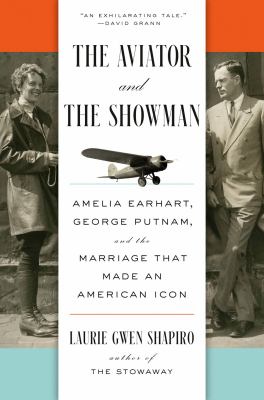
The riveting and cinematic story of a partnership that would change the world forever In 1928, a young social worker and hobby pilot named Amelia Earhart arrived in the office of George Putnam, heir to the Putnam & Sons throne and hitmaker, on the hunt for the right woman for a secret flying mission across the Atlantic. A partnership--professional and soon otherwise--was born. The Aviator and the Showman unveils the untold story of Amelia's decade-long marriage to George Putnam, offering an intimate exploration of their relationship and the pivotal role it played in her enduring legacy. Despite her outwardly modest and humble image, Amelia was fiercely driven and impossibly brave, a lifelong feminist and trailblazer in her personal and professional life. Putnam, the so-called "PT Barnum of publishing" was a bookselling visionary-but often pushed his authors to extreme lengths in the name of publicity, and no one bore that weight more than Amelia. Their ahead-of-its time partnership supported her grand ambitions--but also pressed her into more and more treacherous stunts to promote her books, influencing a certain recklessness up to and including her final flight. Earhart is a captivating figure to many, but the truth about her life is often overshadowed by myth and legend. In this cinematic new account, Laurie Gwen Shapiro emphasizes Earhart's human side, her struggles, and her authentic aspirations, the truths behind her brave pursuits and the compromises she made to fit into societal expectations. With a trove of new sources including undiscovered audio interviews from those closest to Amelia, Amelia and George presents her as a multifaceted woman--complete with flaws, desires, and competitive drive. It is a gripping and passionate tale of adventure, colorful characters, hubris, and a complex and a vivid portrait of a marriage that shaped the trajectory of an iconic life.
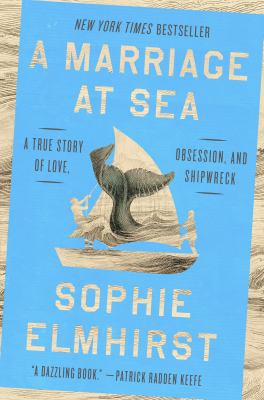
The electrifying true story of a young couple shipwrecked at sea: a mind-blowing tale of obsession, survival, and partnership stretched to its limits. Maurice and Maralyn make an odd couple. He's a loner, awkward and obsessive; she's charismatic and ambitious. But they share a horror of wasting their lives. And they dream - as we all dream - of running away from it all. What if they quit their jobs, sold their house, bought a boat, and sailed away? Most of us begin and end with the daydream. But Maurice began to study nautical navigation. Maralyn made detailed lists of provisions. And in June 1972, they set sail. For nearly a year all went well, until deep in the Pacific, a breaching whale knocked a hole in their boat and it sank beneath the waves. What ensues is a jaw-dropping fight to survive on the wild ocean, with little hope of rescue. Alone together for months in a tiny rubber raft, starving and exhausted, Maurice and Maralyn have to find not only ways to stay alive but ways to get along, as their inner demons emerge and their marriage is put to the greatest of tests. Although they could run away from the world, they can't run away from themselves. Taut, propulsive, and dazzling, A MARRIAGE AT SEA pairs adrenaline-fueled high seas adventure with a gutting love story that asks why we love difficult people, and who we become under the most extreme conditions imaginable.
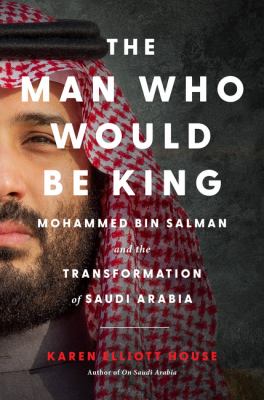
Karen House has gained unprecedented insights into Saudi Arabia and its controversial leader Crown Prince Mohammed bin Salman through her more than forty years of experience covering the Arab kingdom.House reveals a leader who like Peter the Great is a reformer determined to modernize his kingdom but also an autocrat who jails political opponents and rival princes to assure his grip on power. Drawingon extensive interviews with the Crown Prince, his royal relatives,and his inner ring of advisors, [this book] explains in full what shaped the man who is reshaping Saudi Arabia. Drawing on fresh, headline-making reporting, House balances both sides of this complex ruler. We are introduced to MBS the visionary, who has ushered in reforms for women to participate more equitably, encouraged tourism to theKingdom, and placed long term bets on green energy and trillion dollar mega-projects like The Line, a hundred-mile-long enclosed futuristic city in the desert that will be run by AI. And we meet MBS the Machiavellian prince, widely accused of having Washington Post columnist and Saudi dissident Jamal Khashoggi murdered, and of sports washing the kingdom's reputation by investing billions in teams globally, from Premiere League soccer to the LIV (liv) golf tour to the World Cup, which the Kingdom will host in 2034.
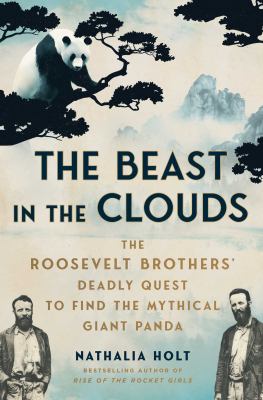
The Himalayas--a snowcapped mountain range that hides treacherous glacier crossings, raiders poised to attack unsuspecting travelers, and air so thin that even seasoned explorers die of oxygen deprivation. Yet among the dangers lies one of the most beautiful and fragile ecosystems in the world. During the 1920s, dozens of expeditions scoured the Chinese and Tibetan wilderness in search of the panda bear, a beast that many believed did not exist. When the two eldest sons of President Theodore Roosevelt sought the bear in 1928, they had little hope of success. Together with a team of scientists and naturalists, they accomplished what a decade of explorers could not, ultimately introducing the panda to the West. In the process, they documented a vanishing world and set off a new era of conservation biology. Along the way, the Roosevelt expedition faced an incredible series of hardships as they disappeared in a blizzard, were attacked by robbers, overcome by sickness and disease, and lost their food supply in the mountains. The explorers would emerge transformed, although not everyone would survive. Beast in the Clouds brings alive these extraordinary events in a potent nonfiction thriller featuring the indomitable Roosevelt family. From the soaring beauty of the Tibetan plateau to the somber depths of human struggle, Nathalia Holt brings her signature 'immersive, evocative' (Bookreporter) voice to this astonishing tale of adventure, harrowing defeat, and dazzling success.
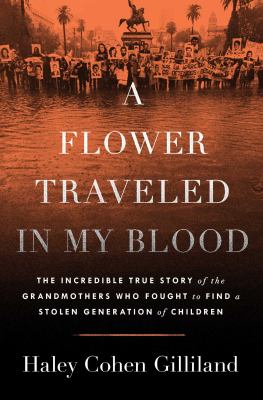
The epic, true story of the Abuelas de Plaza de Mayo, grandmothers who fought to find their stolen grandchildren during Argentina's brutal dictatorship.
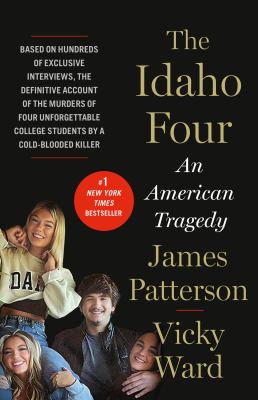
Chronicles the murders of four innocent college students attending the University of Idaho in 2022 and looks at the investigation into the crime.
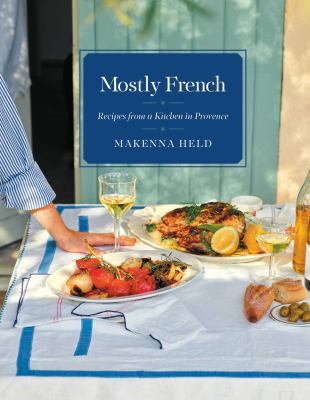
Mostly French is a stunningly beautiful cookbook developed and photographed at La Pitchoune, Julia Child’s home in Provence. Inspired by the olive trees and hills of lavender, thyme, and wild asparagus, author and cooking instructor Makenna Held shares 150 recipes that pay homage to the serenity of Southern France. Through dishes such as Roasted Chicken with Lemon and Sumac, Caprese with Peaches and Strawberries, and Lavender Salted Caramels, among dozens of others that lean into France and ease, she channels the best of French cooking: simple ingredients, technique, and balanced flavors.
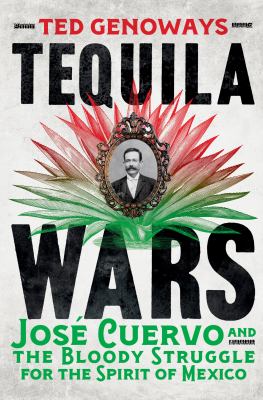
A revelatory history of the vast tequila empire born from the fires of the Mexican Revolution. At the dawn of the twentieth century, José Cuervo inherited his family's humble distillery, La Rojeña, in the Tequila Valley. Within a decade, he had transformed it into a complex national enterprise that would become Mexico's leading producer of tequila. Cuervo grew his kingdom of agave by acquiring thousands of acres of estates throughout the valley; he brought electricity and a railroad line to Tequila, so he could reach drinkers across the country. But when the Mexican Revolution erupted, a charge of treason and a death threat against him by Pancho Villa forced Cuervo to flee. His disappearance turned him into an obscure, shadowy historical figure--despite having one of the most famous names in Mexican history.
The business world has adopted the wrong definition of successful communication. For many years, being “on message” was considered the prime directive. The overwhelming majority of professionals today exist in a rigidly narrow range of bland rhetoric, throwing around industry buzzwords and empty jargon to create the impression of business savvy. But when everyone sounds messaged (and the same), no one stands out. And now, with more ways than ever to get your message across, it’s never been harder to communicate clearly and have your message stick.
Bill McGowan has devoted more than twenty years to helping people find their distinctive voice. From CEOs to White House staffers to television personalities, he has coached thousands of speakers to make their narrative more memorable and distinctive by breaking free from the challenges preventing them from selling their ideas with conviction, motivating their teams during challenging times, or clearly articulating a company’s mission.
Speak, Memorably offers concrete strategies and tools to help anyone, in any stage of their career, cut through the numbing sameness of cliches and boring business rhetoric and find their authentic voice. Inspiring and entertaining, it is a masterclass in interpersonal communication and an inspiring call to action for professionals to break free from forgettable “brand” speak and instead craft thoughtful and memorable messages.

New from Michael Greger M.D., FACLM, whose books have sold more than one million copies worldwide, comes a fully-illustrated cookbook filled with recipes to make you healthier as you age. In his instant New York Times bestseller, How Not To Age, Dr. Michael Greger revealed that diet can regulate every one of the most promising strategies for combating the effects of aging. His Anti-Aging Eight streamlined evidence-based research into simple, accessible steps for ensuring physical and mental longevity. Now, in How Not To Age Cookbook, decades of scientific research are put to use in over a hundred recipes that will leave readers feeling nourished for years to come. Each of these simple, nutrition-packed dishes uses ingredients that have been proven to promote a healthy lifespan and inspiration from the places around the world where people traditionally live the longest. Grounded in the latest nutrition science, How Not to Age Cookbook is chock-full of delicious meals, snacks, and beverages that will keep the body both nourished and youthful.
Explores twenty essential life questions, offering wisdom, personal insights, and transformative lessons designed to help readers confront challenges, find healing, and share inspiration through courage, solidarity, and meaningful conversations.
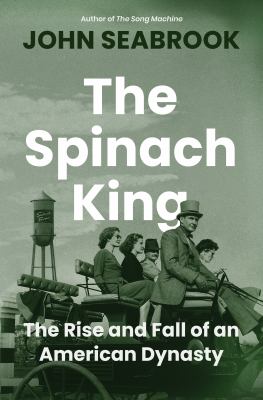
Having left this material for his writer son, my father must have wanted the story told, even if he couldn't bear to tell it himself." So begins the story of a forgotten American dynasty, a farming family from the bean fields of southern New Jersey who became as wealthy and powerful as aristocrats -- only to implode in a storm of lies. The patriarch, C. F. Seabrook, was hailed as the "Henry Ford of Agriculture." His son Jack, a keen businessman, was poised to take over what Life called "the biggest vegetable factory on earth." But the carefully cultivated facade -- glamorous outings by horse-drawn carriage, hidden wine cellars, and movie star girlfriends -- hid dark secrets that led to the implosion of the family business. At the heart of the narrative is a multi-generational succession battle. It's a tale of family secrets and Swiss bank accounts, of half-truths, of hatred and passion -- and lots and lots of liquor. The Seabrooks' colorful legal and moral failings took place amid the trappings of extraordinary privilege. But the story of where that money came from is not so pretty. They say behind every great fortune there is a great crime. At Seabrook Farms, the troubling American histories of race, immigration, and exploitation arise like weeds from the soil. Great Migration Black laborers struck against the company for better wages in the 1930s, and Japanese Americans helped found a "global village" on the farm after World War II. Revealing both C. F. and Jack Seabrook's corruption, The Spinach King undermines the "great man" theory of industrial progress. It also shows how American farms evolved from Jeffersonian smallholdings to gigantic agribusinesses, and what such enormous firms do to the families whose fate is bound up in the land. A compulsively readable story of class and privilege, betrayal and revenge -- three decades in the making -- The Spinach King explores the author's complicated family legacy and the dark corners of the American Dream.
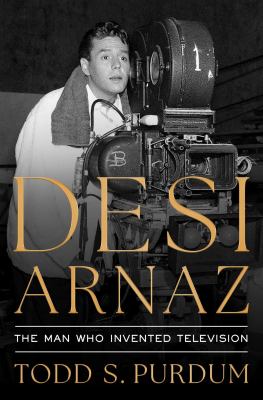
An illuminating biography of Desi Arnaz, the visionary, trailblazing Cuban American who revolutionized television and brought laughter to millions as Lucille Ball's beloved husband on I Love Lucy, leaving a remarkable legacy that continues to influence American culture today. Desi Arnaz is a name that resonates with fans of classic television, but few understand the depth of his contributions to the entertainment industry. In Desi Arnaz, Todd S. Purdum offers a captivating biography that dives into the groundbreaking Latino artist andbusinessman known to millions as Ricky Ricardo from I Love Lucy. Beyond his iconic role, Arnaz was a pioneering entrepreneur who fundamentally transformed the television landscape. His journey from Cuban aristocracy to world-class entertainer is remarkable. After losingeverything during the 1933 Cuban revolution, Arnaz reinvented himself in pre-World War II Miami, tapping into the rising demand for Latin music. By twenty, he had formed his own band and sparked the conga dance craze in America. Behind the scenes, he revolutionized television production by filming I Love Lucy before a live studio audience with synchronized cameras, a model that remains a sitcom gold standard today. Despite being underestimated due to his accent and origins, Arnaz's legacy is monumental. Purdum's biography, enriched withunpublished materials and interviews, reveals the man behind the legend and highlights his enduring contributions to pop culture and television.
A riveting, deeply researched, blood-on-the-spurs biography of Belle Starr, the most legendary female outlaw of the American West.
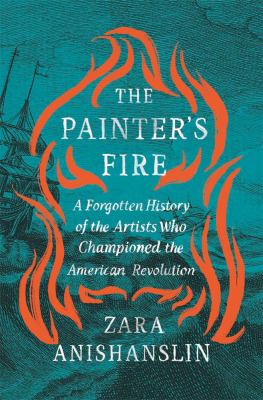
The Painter's Fire follows an unusual cohort of London-based artists-men and women, Black and white-who promoted the Patriot cause during the Revolutionary War, risking their livelihoods and reputations to defy the British Empire. Their experiences, Zara Anishanslin shows, testified to both the promise and the limits of liberty in the founding era.
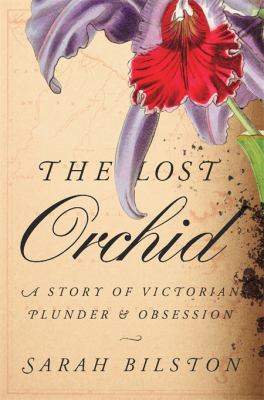
Sarah Bilston follows the colorful characters and fateful dramas of orchid mania, the nineteenth-century craze among European and North American collectors vying to own the world's most coveted flowers. Focusing on the hunt for the so-called lost orchid, Bilston reveals the enormous human and environmental cost of a colonial obsession.
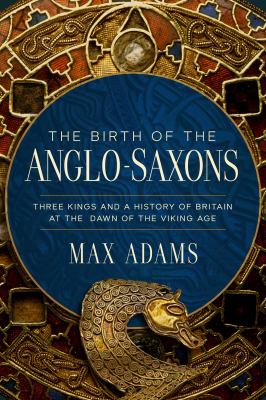
For too long, the eighth century has been a neglected era in British history: a shadow land between the death of Saint Bede and the triumphs of King Ælfred and the eventual unification of England. Butbefore the victories of King Ælfred against the Viking invaders, the kingdom of Mercia--spread across a broad swathe of central England--was the reigning power that exercised central political authority for the first time since the Roman Empire. This authority was used to construct trading networks and markets; to develop strong economic, cultural, and political links with the Continent; and to lay the foundations for a system of defense that would be invigorated and reinvented by Ælfred at the end of the ninth century. ... In this ... history of early medieval Britain, Max Adams reconnects the worlds ofthe three kings--Æthelbald, Offa, and Ælfred--in [a] ... study of the landscape, society, and politics of a fascinating century of change.
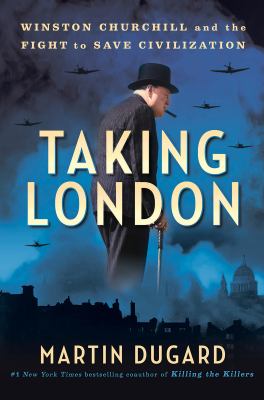
From Martin Dugard, #1 New York Times bestselling coauthor of Bill O'Reilly's Killing series, comes a soaring account of London's desperate fight for survival during the Blitz.

ADHD makes it hard to maintain a healthy lifestyle, but an unhealthy lifestyle can make ADHD more difficult to live with. Health and fitness coach Lisa Dee experienced this firsthand when symptoms of her undiagnosed ADHD began wreaking havoc on her physical and mental health. Executive dysfunction left her in a constant state of overwhelm. She turned to unhealthy foods to cope with her exhaustion and seek stimulation, leading to unwanted weight gain. After finally receiving an ADHD diagnosis at age thirty-one, Lisa realized she needed to consider the unique ways her ADHD brain and body operated if she wanted to feel her best. In Healthy Happy ADHD, she shares the mindset shifts, systems, and habits that transformed her life and form her foundation for healthy living as a woman with ADHD. Drawing from her lived experience, she shows you how to revamp your routines, build new habits, and bring ease to your busy brain by learning to: Ditch the restrictive rules, shame-based ideas, and neurotypical expectations about what exercise, healthy eating, and rest "should" look like; Eat well with "ADHD Easy Meals," get curious about how food affects your energy and mood, and avoid the decision paralysis that comes with meal planning and grocery shopping; Prepare for the impacts of hormonal fluctuations on your ADHD symptoms and recognize the link between ADHD, PMS, and PMDD; Reconnect with yourself and practice self-compassion through introspective exercises that encourage self-reflection and mindfulness. Featuring creative wellness hacks and empowering practices presented in easy-to-digest chapters with an ADHD-friendly design, Healthy Happy ADHD offers a life-changing blueprint for becoming your most vibrant self, both inside and out.
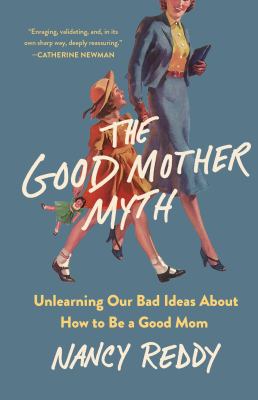
Timely and thought-provoking, Nancy Reddy unpacks and debunks the bad ideas that have for too long defined what it means to be a "good" mom. When Nancy Reddy had her first child, she found herself suddenly confronted with the ideal of a perfect mother-a woman who was constantly available, endlessly patient, and immediately invested in her child to the exclusion of all else. Reddy had been raised by a single working mother, considered herself a feminist, and was well on her way to a PhD. Why did doing motherhood "right" feel so wrong? For answers, Reddy turned to the mid-20th century social scientists and psychologists whose work still forms the basis of so much of what we believe about parenting. It seems ludicrous to imagine modern moms taking advice from midcentury researchers. Yet, their bad ideas about so-called "good" motherhood have seeped so pervasively into our cultural norms. In The Good Mother Myth, Reddy debunks the flawed lab studies, sloppy research, and straightforward misogyny of researchers from Harry Harlow, who claimed to have discovered love by observing monkeys in his lab, to the famous Dr. Spock, whose bestselling parenting guide included just one (1!) illustration of a father interacting with his child. This timely and thought-provoking book will make you laugh, cry, and want to scream (sometimes all at once). Blending history of science, cultural criticism, and memoir, The Good Mother Myth pulls back the curtain on the flawed social science behind our contemporary understanding of what makes a good mom.
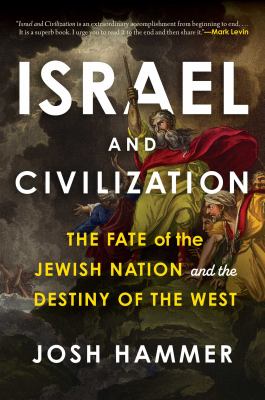
In Israel and Civilization, acclaimed journalist, legal expert, and pundit Josh Hammer makes a righteous case that the key to the prosperity of the West is the flourishing of the Jewish people and the Jewish State of Israel. Hammer's uplifting offense is our best defense against the enemies of the Jewish people's right to self-determination in their ancestral homeland. And as Hammer makes clear, manifesting the promise of Israel requires action by the United States and its allies. There can be no overstating the impact of the trauma of October 7, 2023, on the Jewish people. Yet the anti-Israel reactions the world over have been equally devastating. Rallies of hundreds of thousands explicitly or implicitly promoting Hamas violence; demonstrations of Ivy League professors celebrating the pogrom as awesome and exhilarating; so-called human rights organizations that refuse to unequivocally condemn the use of rape as a weapon of war; and a hydra of multiculturalism, postmodern relativism, and tolerance--it all threatens the physical and metaphysical survival of the West and our essential Jewish heritage. Preserving the best of what's been thought and said throughout history and ensuring that there will be centuries more requires a West that is proud of its Jewish heritage. In other words, the continued existence of the Jewish people is inextricably tied to the endurance of Western civilization. Israel is the center of the battle, and Israel and Civilization explains why and how the Jewish state must win.
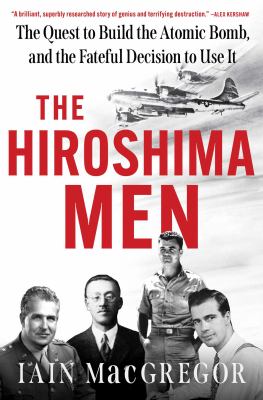
At 8:15 a.m. on August 6th, 1945, the Japanese port city of Hiroshima was struck by the world's first atomic bomb. Built in the US by the top-secret Manhattan Project and delivered by a B-29 Superfortress, a revolutionary long-range bomber, the weapon destroyed large swaths of the city, instantly killing tens of thousands. The world would never be the same again. The Hiroshima Men's unique narrative recounts the decade-long journey towards this first atomic attack. It charts the race for nuclear technology before and during the Second World War, as the allies fought the axis powers in Europe, North Africa, China, and across the vastness of the Pacific, and is seen through the experiences of several key characters: General Leslie Groves, leader of the Manhattan Project alongside Robert Oppenheimer; pioneering Army Air Force bomber pilot Colonel Paul Tibbetts II; the mayor of Hiroshima, Senkichi Awaya, who would die alongside over eighty-thousand of his fellow citizens; and Pulitzer Prize-winning novelist John Hersey, who travelled to post-war Japan to expose the devastation the bomb had inflicted upon the city, and in a historic New Yorker article, described in unflinching detail the dangers posed by its deadly after-effect, radiation poisoning. This thrilling account takes the reader from the corridors of power in the White House and the Pentagon to the test sites of New Mexico; from the air war above Germany to the Potsdam Conference of Truman, Churchill, and Stalin to the savage reconquest of the Pacific to the deadly firebombing air raids across the Japanese islands. The Hiroshima Men also includes Japanese perspectives-a vital aspect often missing from Western narratives-to complete MacGregor's nuanced, deeply human account of the bombing's meaning and aftermath.
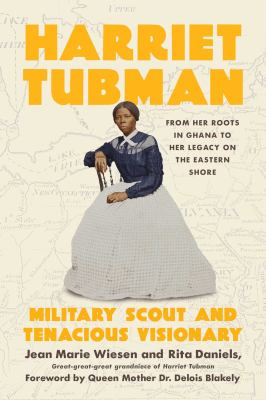
A comprehensive overview of Tubman's life and work, co-authored by one of her descendants, Rita Daniels. For all Harriet Tubman's accomplishments and the myriad books written about her, many gaps, errors, and misconceptions of her legendary life persist. As recognitionand tributes to Tubman's remarkable contributions to American history and civil liberty continues to grow, the time is right for a new biography with the involvement of her family, who have been the caretakers and stewards of her legacy for generations.

This is the shocking true-life story of how PFAS, a set of toxic chemicals most people have never heard of, poisoned the entire country. Based on original, shoe-leather reporting in four highly contaminated towns and damning documents from the polluters' own files, Poisoning the Well traces an ugly history of corporate greed and devastation of human lives. We learn that PFAS, the 'forever chemicals' found in everyday products, from cooking pans to mascara, are coursing through the veins of 97% of Americans.
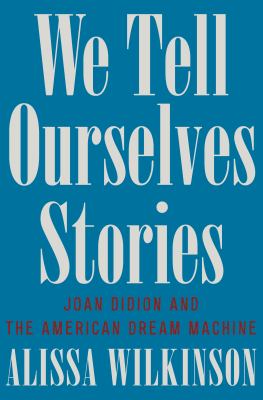
In this riveting cultural biography, New York Times film critic Alissa Wilkinson examines Joan Didion's influence through the lens of American mythmaking. As a young girl, Didion was infatuated with John Wayne and his on-screen bravado, and was fascinated by her California pioneer ancestry and the infamous Donner Party. The mythos that preoccupied her early years continued to influence her work as a magazine writer and film critic in New York, offering glimmers of the many stories Didion told herself that would come to unravel over the course of her career. But out west, show business beckoned.
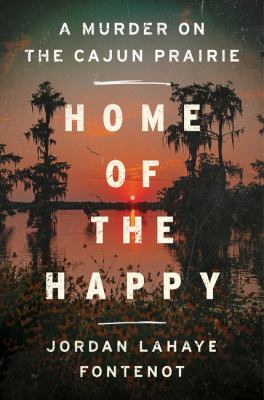
On January 16, 1983, Aubrey LaHaye's body was found floating in the Bayou Nezpique. His kidnapping ten days before sparked "the biggest manhunt in the history of Evangeline Parish." But his descendants would hear the story as lore, in whispers of the dreadful day the FBI landed a helicopter in the family's rice field and set out on horseback to search for the seventy-year-old banker. Decades later, Aubrey's great-granddaughter Jordan LaHaye Fontenot asked her father, the parish urologist, to tell the full story. He revealed that to this day, every few months, one of his patients will bring up his grandfather's murder, and the man accused of killing him, John Brady Balfa, who remains at Angola Prison serving a life sentence. They'll say, in so many words: "Dr. Marcel, I really don't think that Balfa boy killed your granddaddy." For readers of Maggie Nelson's THE RED PARTS and Emma Copley Eisenberg's THE THIRD RAINBOW GIRL, HOME OF THE HAPPY unravels the layers of suffering borne of this brutal crime-and investigates the mysteries that linger beneath generations of silence. Is it possible that an innocent man languishes in prison, still, wrongly convicted of murdering the author's great-grandfather?
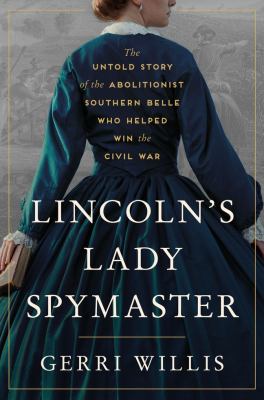
A historical account of wealthy Southern belle Elizabeth Van Lew, whose espionage for Abraham Lincoln and the Union helped win the Civil War.
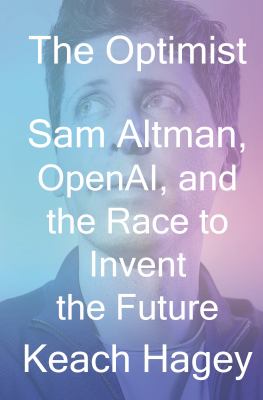
From an acclaimed Wall Street Journal reporter comes the first biography of the enigmatic leader of the AI revolution, charting his ascent within the tech world as well as his ambitions for this powerful new technology. On November 30, 2022, OpenAI released ChatGPT, a chatbot that captivated the world with its uncanny ability to hold humanlike conversations. Not even a year later, on November 17, 2023, Sam Altman, the CEO of OpenAI, was summarily fired on a video call by the company's board. The firing made headlines around the globe: OpenAI is the leader in the race to build AGI--artificial general intelligence, or AI that can think like a human being--and Altman is the most prominent figure in the field. Yet it was mere days before Altman was back running the company he had co-founded, with most of the directors who voted to fire him themselves removed from the board. The episode was a demonstration of how quickly the industry is moving, and of Altman's power to bend reality to his will. In The Optimist, the Wall Street Journal reporter Keach Hagey presents the most detailed account yet of Altman's rise, from his precocious childhood in St. Louis to his first, failed startup experience; his time as legendary entrepreneur Paul Graham's protégé and successor as head of Y Combinator, the start-up accelerator where Altman became the premier power broker in Silicon Valley; the founding of OpenAI and his recruitment of a small yet superior team; and his struggle to keep his company at the cutting edge while fending off determined rivals, including Elon Musk, a former friend and now Altman's bitter opponent. Hagey conducted more than 250 interviews, with Altman's family, friends, teachers, mentors, co-founders, colleagues, investors, and portfolio companies, in addition to spending hours with Altman himself. The person who emerges in her portrait is a brilliant dealmaker with a love of risk, who believes in technological progress with an almost religious conviction--yet who sometimes moves too fast for the people around him. With both the promise and peril of AI increasing by the day, Hagey delivers a nuanced, balanced, revelatory account of the individual who is leading us into what he himself has called "the intelligence age." Altman is a figure out of Isaac Asimov or Neal Stephenson. Or he is the author himself: if it feels as though we have all collectively stepped into a science fiction short story, it is Altman who is writing it.
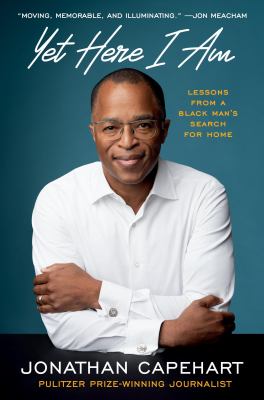
MSNBC anchor Jonathan Capehart is one of the most recognizable faces in cable news. But long before that success, Capehart spent his boyhood growing up without his father, shuttling back and forth between New Jersey and rural Severn, North Carolina, contemplating the complexities of race and identity as they shifted around him. It was never easy bridging two worlds; whether being told he was too smart or not smart enough, too black or not black enough, Capehart struggled to find his place. Then, an internship at The Today Show altered the course of his life, bringing him one step closer to his dream. From there, Capehart embarks on a journey of self-discovery. Yet Here I Am takes us along that journey, from his years at Carleton College, where he learns to embrace his identity as a gay, black man surrounded by a likeminded community; to his decision to come out to his family, risking rejection; and finally to his move to New York City, where time and again he stumbles and picks himself up as he blazes a path to become the familiar face in news we know today. Honest and endearing, Yet Here I Am is an inspirational memoir of identity, opportunity, and of finding one's voice and purpose along the way.
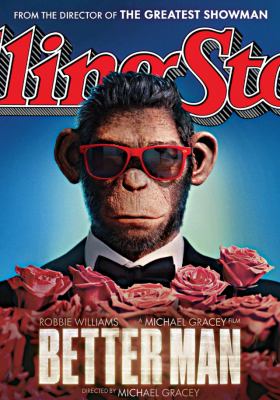
Better Man is based on the true story of the meteoric rise, dramatic fall, and remarkable resurgence of British pop superstar Robbie Williams, one of the greatest entertainers of all time. Under the visionary direction of Michael Gracey (The Greatest Showman), the film is uniquely told from Robbie's perspective, capturing his signature wit and indomitable spirit. It follows Robbie's journey from childhood, to being the youngest member of chart-topping boyband Take That, through to his unparalleled achievements as a record-breaking solo artist all the while confronting the challenges that stratospheric fame and success can bring.
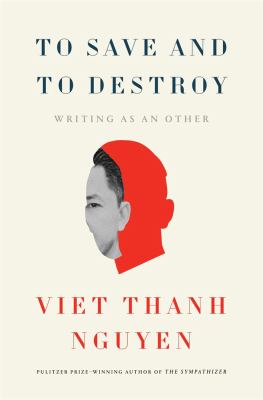
Pulitzer Prize winner Viet Thanh Nguyen's To Save and to Destroy is a deeply personal reflection on outsiders in literature and in US society. Across six essays, first delivered as the Norton Lectures, Nguyen offers insightful readings of authors who shaped his craft, culminating in a poignant and vigorous call for a solidarity of the devastated.
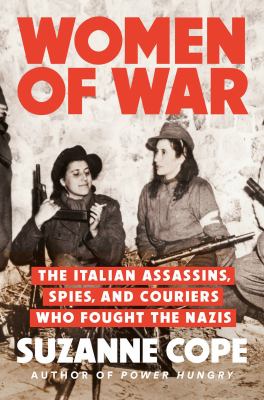
From underground soldiers to intrepid spies, Women of War unearths the hidden history of the brave women who risked their lives to overthrow the Nazi occupation and liberate Italy. Using primary sources and brand new scholarship, historian Suzanne Cope illuminates the roles played by women while Italians struggled under dual foes: Nazi invaders and Italian fascist loyalists. Cope's research and storytelling introduces four brave and resourceful women who risked everything to overthrow the Nazi occupation and pry their future from the fascist grasp. We meet Carla Capponi in Rome, where she made bombs in an underground bunker then ferried them to their deadly destination wearing lipstick and a trenchcoat; and Bianca Guidetti Serra who rode her bicycle up switchbacks in the Alps, dodging bullets while delivering bags of clandestine newspapers and munitions to the anti-fascist armies hidden in the mountains. In Florence, the young future author of Italy's new constitution, Teresa Mattei, carried secret messages and hid bombs; while Anita Malavasi led troops across the Apennine Mountains. Women of War brings their experiences as underground resistance fighters, partisan combatants, spies, and saboteurs to life. Essential and original, Women of War offers not only a reexamination of the elision of women from vital WWII history but also a valuable perspective on the ongoing fight for gender equality and social justice. After all, these were the women who launched a feminist movement as they fought for the future of their country, and what that could mean for its women, all while under Nazi and fascist fire.
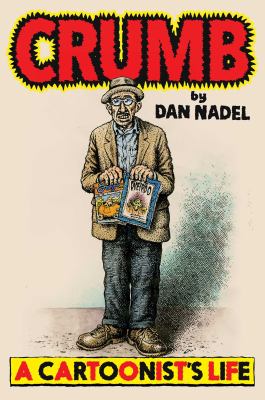
The first biography of Robert Crumb--one of the most profound and influential artists of the 20th century--whose iconic, radically frank and meticulously rendered cartoons and comics inspired generations of readers and cartoonists, from Art Spiegelman to Alison Bechdel.
Our Dear Friends in Moscow tells the story of a group of young Russians, part of an idealistic generation who came of age in Moscow at the end of the twentieth century, just as the communist era imploded and a future full of potential, and uncertainty, stood in front of them. At home, civil war stalked the Russian border in Chechnya, and terrorism came to Moscow. More discreetly, the new Russian government began to pull back from reconciliation with the United States and the West; by the time of Vladimir Putin's second term as president, the country had embraced a kind of ethno-nationalism and was heading for war at home and abroad. The group is torn apart by the shift in Russia. Some flee; others become sinister agents of the ever more aggressive state. The center cannot hold.
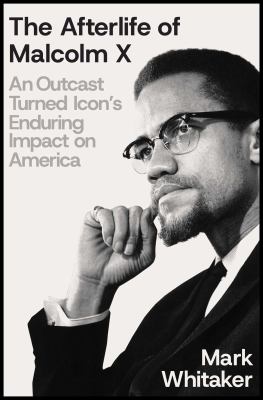
Explores the iconic freedom fighter's posthumous influence on Black Power, hip-hop, literature, sports, and politics while also detailing the wrongful convictions in his assassination, offering a broad view of his lasting impact on American culture and history.
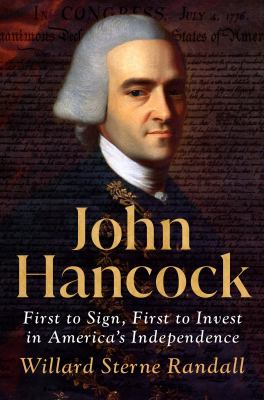
A compelling, intimate portrait of John Hancock, going beyond the flamboyant signature to provide insight into the pivotal role that he had in the American Revolution.
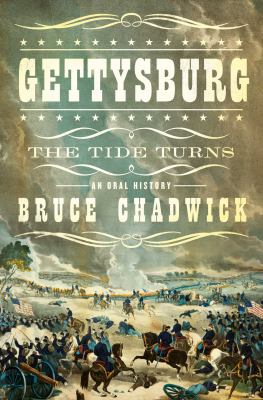
The definitive oral history of the battle that turned the tide of the Civil War that combines vivid first-hand accounts with rich historical narrative. In late June of 1863, one month after his victory over Union forces at Chancellorsville, Virginia, General Robert E. Lee, head of the Army of Northern Virginia, invaded the North. He would cross the Potomac River and head towards Harrisburg, Pennsylvania, with the goal of seizing the trains which would then take his army into Philadelphia and perhaps even New York City. He hoped that these victories would force U.S. President Abraham Lincoln to surrender. As he pushed north, Lee was operating without his cavalry leader, J.E.B. Stuart, whom he had allowed to go on a useless scouting mission. At the same time, the Union army, now led by little known commander George Meade was tracking Lee and his men. Both sides clashed at Gettysburg, a tiny Pennsylvania farm village on July 1 in what would be a three-day battle that would change the course of the war. The battle would reveal the mettle of the unheralded Meade and would also call into question General Lee’s reputation as a legendary commander when he unleashed the ill planned and ill prepared Pickett’s Charge. The battle proved costly to both sides. Some 50,000 men were killed across the battlefield and the defeated Lee’s army would never again invade the North. After so much bloodshed, President Lincoln's history-making and eloquent Gettysburg Address came to embody the essence of the war. The address, not even three minutes long, is considered the finest speech ever delivered buy an American President and has been memorized by generations ever since. Using letters, diaries, journals, newspaper articles, and other written sources, Bruce Chadwick has crafted another masterful oral history. Skillfully combining traditional historic narrative with the in-the-moment ethos of an oral history, Gettysburg: The Tide Turns brings this iconic battle to fresh and vivid life.

50 Vegetarian Recipes from 50 Years of Claire's Corner Copia by Claire Criscuolo marks a culinary milestone, celebrating five decades of nourishing a community with vibrant, plant-based cuisine. This anniversary cookbook invites you into the heart of Claire's Corner Copia, the beloved vegetarian restaurant. Divided into five mouthwatering chapters, this collection features some of Claire's most popular recipes, each one a testament to her passion for healthy, delicious food. Alongside these timeless recipes, Claire shares intimate anecdotes from the restaurant's rich history, offering a glimpse into the journey of a culinary icon. The cookbook also includes new recipes inspired by the challenges of the COVID-19 pandemic, with an emphasis on healing, healthful ingredients, and refreshing mocktails and smoothies designed to support recovery. Lavishly illustrated with full-color photographs of the dishes and the restaurant itself, this book is not just a celebration of Claire's Corner Copia's legacy but a treasure trove of vegetarian recipes that have stood the test of time.
A doctor and best-selling author provides decade-specific nutrition and lifestyle advice to help readers maximize longevity, prevent disease and age well, offering practical steps to optimize health and vitality in your 30s, 40s, 50s and beyond.
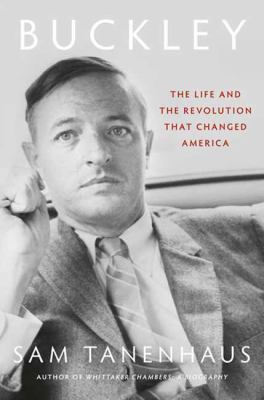
At age 25 in 1951, with the publication of God and Man at Yale, a scathing attack on his alma mater, William F. Buckley, Jr. instantly seized the public stage-and commanded it for the next half century, leading a new generation of activists and ideologues to the heights of political power while he himself attained unique fame and public influence. Ten years before his death in 2008, Buckley chose prize-winning biographer Sam Tanenhaus to tell the full story of his life and times, granting him extensive interviews, entrée to his intimate circle, and unrestricted access to his most private papers. Thus began a deep investigation into the vast and often hidden universe of Bill Buckley and the conservative revolution. Buckley vividly captures its subject in all his facets and phases-founding editor of National Review, best-selling novelist and memoirist, jet-setting clubman and socialite, downhill skier and sailboat racer, wisecracking candidate for mayor of New York, flamboyant antagonist of James Baldwin and Gore Vidal, mentor and idol to hundreds who today populate the worlds of politics and media. Tanenhaus also reveals the private and at times secret life of Bill Buckley: his backstage collaborations with Senator Joseph McCarthy and Watergate felon Howard Hunt; thorny relationships with Presidents Nixon and Reagan; flirtations with financial ruin and legal censure-and, late in life, Buckley's lonely struggle to hold together a movement coming apart over AIDS, the culture wars, and the invasion of Iraq. Majestic in its sweep, lushly detailed, rich in ideas and argument, packed with news and revelations, Buckley is the definitive account of an American giant and the revolution he led.
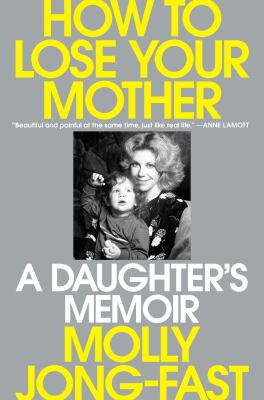
From the political writer and podcaster, a ferociously honest and disarmingly funny memoir about her elusive mother's encroaching dementia and a reckoning with her complicated childhood.
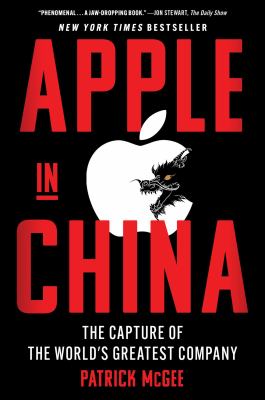
Looks at how Apple helped build China's dominance in electronics assembly and manufacturing, only to find itself trapped in a relationship with an authoritarian state making ever-increasing demands.
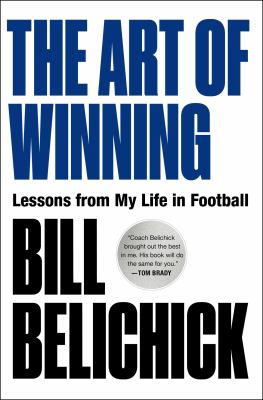
A legendary football coach shares a comprehensive philosophy for success, drawing from his decades of experience in sports to offer principles on leadership, motivation, growth and decision-making that can be applied to any field or profession.
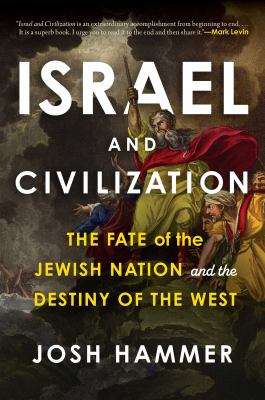
In Israel and Civilization, acclaimed journalist, legal expert, and pundit Josh Hammer makes a righteous case that the key to the prosperity of the West is the flourishing of the Jewish people and the Jewish State of Israel. Hammer's uplifting offense is our best defense against the enemies of the Jewish people's right to self-determination in their ancestral homeland. And as Hammer makes clear, manifesting the promise of Israel requires action by the United States and its allies. There can be no overstating the impact of the trauma of October 7, 2023, on the Jewish people. Yet the anti-Israel reactions the world over have been equally devastating. Rallies of hundreds of thousands explicitly or implicitly promoting Hamas violence; demonstrations of Ivy League professors celebrating the pogrom as awesome and exhilarating; so-called human rights organizations that refuse to unequivocally condemn the use of rape as a weapon of war; and a hydra of multiculturalism, postmodern relativism, and tolerance--it all threatens the physical and metaphysical survival of the West and our essential Jewish heritage. Preserving the best of what's been thought and said throughout history and ensuring that there will be centuries more requires a West that is proud of its Jewish heritage. In other words, the continued existence of the Jewish people is inextricably tied to the endurance of Western civilization. Israel is the center of the battle, and Israel and Civilization explains why and how the Jewish state must win.
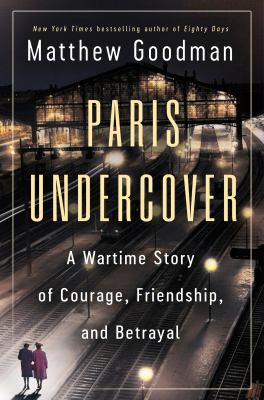
Two women in Nazi-occupied Paris created a daring escape line that rescued dozens of Allied servicemen. With one in a German prison camp, the other wrote a book about it--a memoir that was built on lies. Now the bestselling author of Eighty Days shares their incredible, never-before-told full story.
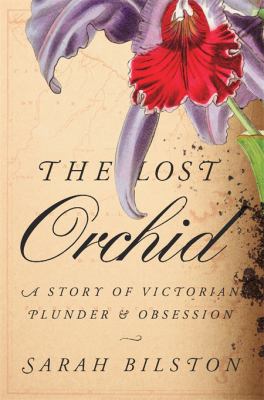
Sarah Bilston follows the colorful characters and fateful dramas of orchid mania, the nineteenth-century craze among European and North American collectors vying to own the world's most coveted flowers. Focusing on the hunt for the so-called lost orchid, Bilston reveals the enormous human and environmental cost of a colonial obsession.
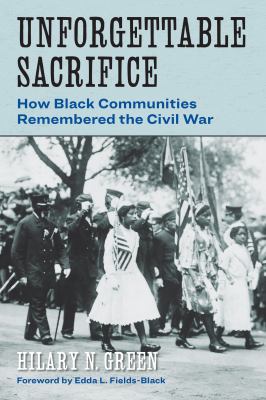
Unforgettable Sacrifice offers a groundbreaking exploration into the heart of African American memory of the Civil War, challenging conventional narratives and revealing a rich history preserved through oral traditions and communal efforts. Through extensive archival research and stories shared on the porches of African American families, Hilary Green provides a detailed examination of how diverse Black communities across the United States have actively preserved and contested the memory of the Civil War, from the nineteenth century to the present.
Epidemic diseases enter the world by chance, but they become catastrophic by human design. With clear-eyed research and lush prose, A History of the World in Six Plagues shows that throughout history, outbreaks of disease have been exacerbated by and gone on to further expand the racial, economic, and sociopolitical divides we allow to fester in times of good health. Princeton-trained historian Edna Bonhomme's examination of humanity's disastrous treatment of pandemic disease takes us across place and time from Port-au-Prince to Tanzania, and from plantation-era America to our modern COVID-19-scarred world to unravel shocking truths about the patterns of discrimination in the face of disease. Based on in-depth research and cultural analysis, Bonhomme explores Cholera, HIV/AIDS, the Spanish Flu, Sleeping Sickness, Ebola, and COVID-19 amidst the backdrop of unequal public policy. But much more than a remarkable history, A History of the World in Six Plagues is also a rising call for change.
Looks at how Apple helped build China's dominance in electronics assembly and manufacturing, only to find itself trapped in a relationship with an authoritarian state making ever-increasing demands.
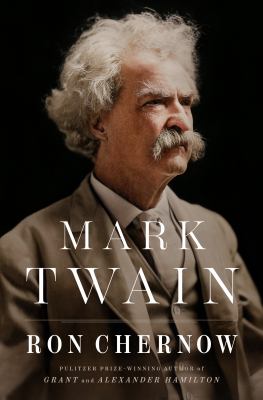
The Washington Post Pulitzer Prize-winning biographer Ron Chernow illuminates the full, fascinating, and complex life of the writer long celebrated as the father of American literature, Mark Twain Before he was Mark Twain, he was Samuel Langhorne Clemens. Born in 1835, the man who would become America’s first, and most influential, literary celebrity spent his childhood dreaming of piloting steamboats on the Mississippi. But when the Civil War interrupted his career on the river, the young Twain went west to the Nevada Territory and accepted a job at a local newspaper, writing dispatches that attracted attention for their brashness and humor. It wasn’t long before the former steamboat pilot from Missouri was recognized across the country for his literary brilliance, writing under a pen name that he would immortalize. In this richly nuanced portrait of Mark Twain, acclaimed biographer Ron Chernow brings his considerable powers to bear on a man who shamelessly sought fame and fortune, and crafted his persona with meticulous care. After establishing himself as a journalist, satirist, and lecturer, he eventually settled in Hartford with his wife and three daughters, where he went on to write The Adventures of Tom Sawyer and Adventures of Huckleberry Finn . He threw himself into the hurly-burly of American culture, and emerged as the nation’s most notable political pundit. At the same time, his madcap business ventures eventually bankrupted him; to economize, Twain and his family spent nine eventful years in exile in Europe. He suffered the death of his wife and two daughters, and the last stage of his life was marked by heartache, political crusades, and eccentric behavior that sometimes obscured darker forces at play. Drawing on Twain’s bountiful archives, including thousands of letters and hundreds of unpublished manuscripts, Chernow masterfully captures the man whose career reflected the country’s westward expansion, industrialization, and foreign wars, and who was the most important white author of his generation to grapple so fully with the legacy of slavery. Today, more than one hundred years after his death, Twain’s writing continues to be read, debated, and quoted. In this brilliant work of scholarship, a moving tribute to the writer’s talent and humanity, Chernow reveals the magnificent and often maddening life of one of the most original characters in American history.
In a rare window into some of her life's pivotal moments, Melinda French Gates draws from previously untold stories to offer a new perspective on encountering transitions. "You don't get to be my age without navigating all kinds of transitions. Some you embraced and some you never expected. Some you hoped for and some you fought as hard as you could." - Melinda French Gates Transitions are moments in which we step out of our familiar surroundings and into a new landscape-a space that, for many people, is shadowed by confusion, fear, and indecision. The Next Day accompanies readers as they cross that space, offering guidance on how to make the most of the time between an ending and a new beginning and how to move forward into the next day when the ground beneath you is shifting. In this book, Melinda will reflect, for the first time in print, on some of the most significant transitions in her own life, including becoming a parent, the death of a dear friend, and her departure from the Gates Foundation. The stories she tells illuminate universal lessons about loosening the bonds of perfectionism, helping friends navigate times of crisis, embracing uncertainty, and more. Each one of us, no matter who we are or where we are in life, is headed toward transitions of our own. With her signature warmth and grace, Melinda candidly shares stories of times when she was in need of wisdom and shines a path through the open space stretching out before us all.
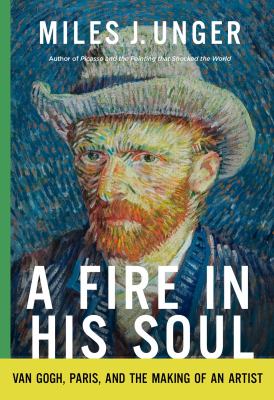
Vincent Van Gogh arrived in the French capital on the last day of February 1886, a month short of his thirty-third birthday. He was a man beaten down by life, half-starved, and nearly broken psychologically. He was saved by his brother Theo, who provided him with room, board, and, most crucially, emotional support while he attempted to master the difficult craft of painting. Thus far, Vincent's crude scenes of peasant life rendered in murky shades of brown and gray were both hackneyed and amateurish. Theo, a successful art dealer at a prestigious Parisian firm, dismissed them as gloomy, unappealing, and, worst of all, unmarketable. By the time Vincent left Paris, almost exactly two years later, he'd transformed himself into one of the most original artists of the age, turning out works of hallucinatory intensity in vivid hues and stamped with his own distinctive personality. A Fire in His Soul chronicles this remarkable transformation. It's a tale filled with tragedy and triumph, personal anguish and creative fulfillment, as Vincent, through sheer force of will, reinvents himself as a painter of unparalleled expressive power. Along the way, the reader will discover an unfamiliar Van Gogh: not the solitary genius of the popular imagination, shunned by an uncomprehending world and conjuring masterpieces from the depths of his lonely soul. In Paris, he was at the center of a community of like-minded seekers. Here, Van Gogh was able to engage in a lively dialogue with fellow artists almost as daring as he was, expanding his notion of what art could and should be. It was in the cafes and studios of Montmartre and in the grand galleries of the Louvre and Luxembourg, that Van Gogh received his artistic education--a crash course that at first disoriented him but ultimately sparked his creative breakthrough. Working alongside such legendary figures as Gauguin, Toulouse-Lautrec, Seurat, and Signac, Vincent perfected his technique and launched an artistic revolution.
A thrilling investigation into the mysterious identity of Bitcoin’s creator and a deep dive into crypto’s utopian origin story—from The New York Times bestselling author of The Billionaire’s Vinegar “Could be the best mystery story of the past twenty years.”—James Patterson “ The Mysterious Mr. Nakamoto will leave you amazed, enlightened, and utterly breathless.”—Robert Kolker, #1 New York Times bestselling author of Hidden Valley Road In October 2008, someone going by the name Satoshi Nakamoto posted a white paper outlining “a peer-to-peer electronic cash system” called Bitcoin to an arcane listserv populated by Cypherpunks. No one in the community had heard of Nakamoto, and just as people were starting to wonder who he was, he vanished. As the years passed, and the scope of Nakamoto’s achievement became clear, the truth of his identity grew into the greatest unsolved mystery of our time. The Mysterious Mr. Nakamoto traces Benjamin Wallace’s attempt to unmask the figure behind the currency and the world it wrought. Nakamoto’s Bitcoin at first seemed destined to fulfill the dreams of fringe 1990s utopians for a currency set free from governments and big banks. Yet after he disappeared, his creation took on a strange new life in the financial markets, where rampant speculation fueled a vision of crypto as a potential windfall, inviting charlatans and scammers and opening a vast gulf between Bitcoin’s idealistic origins and its troubled reputation. But who was Nakamoto? Whoever he was could rightly claim to have invented one of the most important technologies of the new century. And Nakamoto was a billionaire—his Bitcoin wallet held an untouched eleven-figure fortune waiting to be claimed. With the same propulsive-narrative flair that made his New York Times bestseller The Billionaire’s Vinegar an instant success, Benjamin Wallace presents a page-turning work of investigative journalism. Tracking leads from London to Oslo to Los Angeles, from coastal Australia to the Arizona desert, he takes readers through a rogues’ gallery tour of Nakamoto suspects—from benevolent geniuses like cryptographer Hal Finney to difficult ones like a reclusive polymath known to his followers only as Jim; from the mercurial Australian Craig Wright, who claims to be Nakamoto, to a secret team at the National Security Agency. With the forensic skill of Sherlock Holmes and the storytelling verve of Arthur Conan Doyle, Wallace follows the trail of computer code and personal writings to the heart of the Nakamoto mystery while interrogating the very nature of mystery itself.
An explosive, deeply reported exposé of Johnson & Johnson, one of America’s oldest and most trusted pharmaceutical companies—from an award-winning investigative journalist “A page-turning drama that raises life-or-death questions about the world’s largest healthcare conglomerate.”—Jonathan Eig, Pulitzer Prize–winning author of King: A Life One day in 2004, Gardiner Harris, a pharmaceutical reporter for The New York Times, was early for a flight and sat down at an airport bar. He struck up a conversation with the woman on the barstool next to him, who happened to be a drug sales rep for Johnson & Johnson. Her horrific story about unethical sales practices and the devastating impact they’d had on her family fundamentally changed the nature of how Harris would cover the company—and the entire pharmaceutical industry—for the Times . His subsequent investigations and ongoing research since that very first conversation led to this book—a blistering exposé of a trusted American institution and the largest healthcare conglomerate in the world. Harris takes us light-years away from the company’s image as the child-friendly “baby company” as he uncovers reams of evidence showing decades of deceitful and dangerous corporate practices that have threatened the lives of millions. He covers multiple disasters: lies and cover-ups regarding the link of Johnson’s Baby Powder to cancer, the surprising dangers of Tylenol, a criminal campaign to sell antipsychotics that have cost countless lives, a popular drug used to support cancer patients that actually increases the risk that cancer tumors will grow, and deceptive marketing that accelerated opioid addictions through their product Duragesic (fentanyl) that rival even those of the Sacklers and Purdue Pharma. Filled with shocking and infuriating but utterly necessary revelations, No More Tears is a landmark work of investigative journalism that lays bare the deeply rooted corruption behind the image of babies bathing with a smile.
From communication expert Jefferson Fisher, the definitive book on making your next conversation the one that changes everything. No matter who you're talking to, The Next Conversation gives you immediately actionable strategies and phrases that will forever change how you communicate. Jefferson Fisher, trial lawyer and one of the leading voices on real-world communication, offers a tried-and-true framework that will show you how to transform your life and your relationships by improving your next conversation.
Now, for the first time, Christie shares what life has been like, both in front of and behind the cameras, considering the girl she was alongside the woman she has become. Her stories are as heartening as they are eye-opening, as she recounts her most formative chapters, including the betrayal by her biological father as a child, her lifelong passion for art, her whirlwind career, her four tumultuous marriages--including her heartbreaking divorce from Billy Joel--and the harrowing experiences that almost cut her life short. Through it all, Christie's unwavering belief in the magic and mystery of life has been her guiding light, even during her darkest times. It is with this grace and gratitude that she tenderly chronicles the unexpected, unexplainable ways her life has unfolded, embracing every adventure and twist of fate along the way: traveling the world as a supermodel at the height of the model wars, living life on the road with her rock-star husband and their baby, starring in blockbuster movies and hit sitcoms, riding horses with cowboys, training with world-champion boxers, and even stepping into the spotlight on Broadway.
From the legendary musical figure and former vocalist of the J. Geils Band, whose career spans more than six decades, a treasure trove of revealing vignettes, all told with gentle humor and heartrending poignancy. ... Told as a series of encounters with remarkable people over the course of a long and equally remarkable musical career, Waiting on the Moon provides a revealing glimpse of both iconic and lesser-known creative giants as they work--the forces that drive them to achievement, the demons they battle, the patterns of their human relationships.

This biography redefines Yoko Ono's life, shedding light on her often misunderstood and misrepresented journey. Once dismissed as a villain in the Beatles saga, Yoko's story is revealed beyond her association with John Lennon. Born into a wealthy family in pre-war Tokyo, she endured the horrors of war before becoming a pioneering figure in avant-garde art, music, feminism, and activism in London, Tokyo, and New York. The book explores how she faced intense public scrutiny, wrongly blamed for breaking up the Beatles, and yet continued to create groundbreaking work and advocate for peace. Drawing from David Sheff's interviews with Yoko, her family, and close friends, this biography offers a harrowing, moving, and ultimately redemptive portrait of Yoko Ono, elevating her legacy to iconic status.
This memoir explores the experiences of children who escaped the Holocaust through advertisements placed in the *Manchester Guardian* by Jewish families in Vienna in 1938. The book follows journalist Julian Borger as he investigates the story of his father, Robert, who was one of the children saved by such an ad. Decades later, Borger uncovers the hidden histories of his father and other children who were displaced during World War II. Drawing on historical records and personal accounts, the narrative spans various locations, including Vienna, Shanghai, Britain, Nazi Germany, Holland, France, and New York, highlighting the children's journeys, the impact of war, and the individuals who helped them survive.
Based on an NYU course, this guidebook by Professor Suzy Welch presents a step-by-step method for readers to identify their desired direction and purpose in a changing world. Drawing on research and testing, the book guides readers through a process of understanding their values, aptitudes, and economically viable interests. It aims to help individuals discover fulfilling and financially sustainable paths.
The heart-pounding true story of the daring American women who piloted the most dangerous aircraft of World War II through the treacherous skies of Britain.
When Tyler Merritt was diagnosed with cancer, everything he thought he knew about what mattered in life changed. Though he made it through a highly invasive surgery and thought he was in the clear, Tyler soon realized that the cancer had other plans. It wasn't a question of if the tumor would come back for an encore, his doctors told him. It was a question of when. The clock was ticking. This Changes Everything is a humorous and optimistic love letter to this beautiful life. As Tyler counts down the days until his next scan, he begins to understand that none of us have time for anger, for being unforgiving, for foolishness, for letting relationships drift, or for letting friendships to be lost. It's a clear-eyed reckoning with the reality that our time on this earth is limited and a hopeful vision of how each of us can make the most of the time we have left. Laced with Tyler's trademark humor, love of pop culture, and arguably too many musical theater references, This Changes Everything is a story about how wrestling with the idea of death can birth a whole new outlook on life, how we live it, and the urgency that comes when you grasp that time is a precious commodity.
When RMS Titanic sank on a cold night in 1912, barely seven hundred people escaped with their lives. Among them were six Chinese men. Arriving in New York, these six were met with suspicion and slander. Fewer than twenty-four hours later, they were expelled from the country and vanished. When historian Steven Schwankert first stumbledacross the fact that eight Chinese nationals were onboard, of whom all but two survived, he couldn't believe that there could still be untold personal histories from the Titanic. Now, at last, their story can be told. The result of meticulous research, a dogged investigation, and interviews with family members, The Six is an epic journey across continents that reveals the full story of these six forgotten survivors. Who were Ah Lam, Chang Chip, Cheong Foo, Fang Lang (or Fong Wing Sun), Lee Bing, and Ling Hee?
A sweeping and trenchant exploration of the history of Native American boarding schools in the U.S., and the legacy of abuse wrought by systemic attempts to use education as a tool through which to destroy Native culture. From the mid-19th century to the late 1930s, tens of thousands of Native children were pulled from their families to attend boarding schools that claimed to help create opportunity for these children to pursue professions outside their communities and otherwise "assimilate" into American life. In reality, these boarding schools-sponsored by the US Government but often run by various religious orders with little to no regulation-were an insidious attempt to destroy tribes, break up families, and stamp out the traditions of generations of Native people. Children were beaten for speaking their native languages, forced to complete menial tasks in terrible conditions, and utterly deprived of love and affection. Ojibwe journalist Mary Pember's mother was forced to attend one of these institutions-a seminary in Wisconsin, and the impacts of her experience have cast a pall over Mary's own childhood, and her relationship with her mother. Highlighting both her mother's experience and the experiences of countless other students at such schools, their families, and their children, Medicine River paints a stark portrait of communities still reckoning with the legacy of acculturation that has affected generations of Native communities. Through searing interviews and assiduous historical reporting, Pember traces the evolution and continued rebirth of a culture whose country has been seemingly intent upon destroying it.
An intimate and masterful biography of Zbigniew Brzezinski -- President Carter's national security advisor and one of America's leading geopolitical thinkers -- from one of the finest columnists and political writers at work today. Zbigniew Brzezinski was a key architect of the Soviet Union's demise, which ended the Cold War. A child of Warsaw -- the heart of central Europe's bloodlands -- Brzezinski turned his fierce resentment at his homeland's razing by Nazi Germany and the Red Army into a lifelong quest for liberty. Born the year that Joseph Stalin consolidated power, and dying a few months into Donald Trump's first presidency, Brzezinski was shaped by and in turn shaped the global power struggles of the twentieth and early twenty-first centuries. As counsel to US presidents from John F. Kennedy to Barack Obama, and chief foreign policy figure of the late 1970s under Jimmy Carter, Brzezinski converted his acclaim as a Sovietologist into Washington power. With Henry Kissinger, his lifelong rival with whom he had a fraught on-off relationship, he personified the new breed of foreign-born scholar who thrived in America's "Cold War University" -- and who ousted Washington's gentlemanly class of WASPs who had run U.S. foreign policy for so long. Brzezinski's impact, aided by his unusual friendship with the Polish-born John Paul II, sprang from his knowledge of Moscow's "Achilles heel" -- the fact that its nationalities, such as the Ukrainians, and satellite states, including Poland, yearned to shake off Moscow's grip. Neither a hawk nor a dove, Brzezinski was a biting critic of George W. Bush's Iraq War and an early endorser of Obama. Because he went against the DC grain of joining factions, and was on occasion willing to drop Democrats for Republicans, Brzezinski is something of history's orphan. His historic role has been greatly underweighted. In the almost cinematic arc of his life can be found the grand narrative of the American century and great power struggle that followed.
Captain William Kidd stands as one of the most notorious "pirate" outlaws ever, but his legend is tainted by a bed of lies. Having captivated imaginations for more than three hundred years and inspired many stories about pirates, troubling questions remain. Was he really a criminal or is the truth more inconvenient: that he was a buccaneer's worst nightmare, a revered pirate hunter turned fall guy for scheming politicians? In Captain Kidd, his ninth-great-grandson, bestselling author Samuel Marquis, reveals the real story. Kidd was an English American privateer and leading New York husband and father. The King of England himself dubbed Kidd "trusty and well-beloved," and some historians describe him as a "worthy, honest-hearted, steadfast, much -enduring sailor" who was the "victim of a deliberate travesty of justice." With honors far more esteemed than the menacing Blackbeard, or any other sea rover at the turn of the seventeenth century, how can Kidd be considered both gentleman and pirate, both hero and villain?
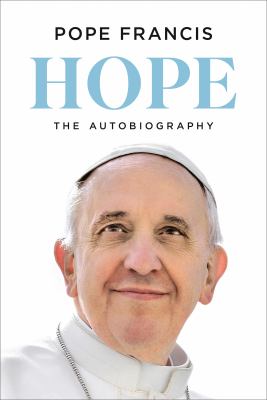
Hope is the first autobiography in history ever to be published by a Pope. Written over six years, this complete autobiography starts in the early years of the twentieth century, with Pope Francis’s Italian roots and his ancestors’ courageous migration to Latin America, continuing through his childhood, the enthusiasms and preoccupations of his youth, his vocation, adult life, and the whole of his papacy up to the present day. In recounting his memories with intimate narrative force (not forgetting his own personal passions), Pope Francis deals unsparingly with some of the crucial moments of his papacy and writes candidly, fearlessly, and prophetically about some of the most important and controversial questions of our present times: war and peace (including the conflicts in Ukraine and the Middle East), migration, environmental crisis, social policy, the position of women, sexuality, technological developments, the future of the Church and of religion in general.
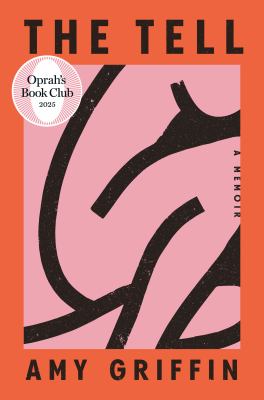
For decades, Amy ran. Through the dirt roads of Amarillo, Texas, where she grew up; to the campus of the University of Virginia, as a student athlete; on the streets of New York, where she built her adult life; through marriage, motherhood, and a thriving career. To outsiders, it all looked, in many ways, perfect. But Amy was running from something-a secret she was keeping not only from her family and friends, but unconsciously from herself. "You're here, but you're not here," her daughter said to her one night. "Where are you, Mom?" So began Amy's quest to solve a mystery trapped in the deep recesses of her own memory-a journey that would take her into the burgeoning field of psychedelic therapy, to the limits of the judicial system, and ultimately, home to the Texas panhandle, where her story began. In her relentless search for the truth, Griffin probes the pursuit of perfectionism, control, and maintaining appearances that drives so many women, asking the question: When, in our path from girlhood to womanhood, did we learn to look outside ourselves for validation? And what kind of freedom is possible if we accept who we really are? With hope, heart, and honesty, Griffin points a way forward for all of us, revealing the transcendent power of radical truth-telling to deepen our connection to our families-and ourselves.